
Peerless Quran
MU’taq’een
2024
‘Perhaps you love a thing bad for you; perhaps you dislike something good for you.’
WORLDY LIFE – HEREAFTER
RE:TIRED
The Qur’an is Peerless
The Qur’an is Peerless – Based on the Views of Rafakut Ali
Rafakut Ali’s writings consistently illuminate one central truth — that the Qur’an stands peerless, unmatched by any human composition, tradition, or interpretation. For Rafakut the Qur’an is not merely a religious text among many, but the sole divine guidance for humanity which teaches Morality by way of God-cognizance. Untainted, self-sufficient, and eternally preserved. It requires no supplement from man-made doctrines, nor validation through rituals or scholarly embellishment. Its light is pure, complete, and final — for those who reflect with sincerity and seek guidance from God alone.
1. The Qur’an: Divine Revelation Beyond Comparison
Rafakut Ali emphasises that the Qur’an is not the work of man but the direct word of God, revealed through the Prophet Muhammad as a universal message to all creation. No other scripture or writing can rival its composition, wisdom, or transformative power. God challenges mankind and jinn alike: “If all mankind and jinn gathered to produce the like of this Qur’an, they could not produce its like, even if they were to help one another” (Qur’an 17:88).
For Rafakut, this verse is not a poetic boast — it is a factual declaration of divine uniqueness. The Qur’an is a living miracle, not bound to an era or language. Its guidance continues to unfold across generations, its meanings deepening as human understanding matures. It is not to be imitated, interpreted through culture, or subordinated to clerical authority. It stands alone — peerless.
2. Man-Made Texts and the Corruption of Guidance
Ali often contrasts the divine purity of the Qur’an with the corruption introduced by man-made writings such as the Hadith literature and sectarian doctrines. He argues that mankind, though sincere in many cases, cannot be trusted as the custodian of religious truth once they begin to add, modify, or interpret divine revelation through their own reasoning or traditions.
In his view, the moment human opinion becomes authoritative over the Word of God, religion becomes polluted. The Qur’an warns precisely of this tendency — that earlier communities distorted their scriptures and followed conjecture instead of revelation (Qur’an 2:79, 3:78). Thus, Rafakut Ali insists that Muslims today must not repeat the same error by elevating the words of men above the words of God. The Qur’an alone is the criterion (al-Furqan) — the measure by which all else must be judged.
3. The Qur’an as Self-Sufficient Guidance
To Rafakut Ali, the Qur’an is a self-contained system of divine law, morality, and wisdom. It does not require external commentaries or clerical intermediaries to be understood. Rather, it invites personal reflection — tadabbur — and the use of intellect to engage directly with God’s message.
He highlights that the Qur’an repeatedly describes itself as “clear,” “detailed,” “explained fully,” and “without omission.” Therefore, any claim that Muslims need external explanations to “understand” it is, in essence, a denial of its completeness. As stated in Qur’an 6:114:
“Shall I seek other than God as a source of law, when it is God who has revealed this Book, fully detailed?”
Rafakut Ali interprets this as a warning against replacing divine revelation with theological opinions, sectarian dogmas, or ritualistic traditions. Guidance, he asserts, is not achieved through blind adherence to scholars but through conscious submission to the Qur’an — the only book that leads directly to God-consciousness (taqwa) thereby Morality.
4. The Qur’an’s Linguistic and Moral Perfection
Rafakut Ali also recognises the Qur’an’s inimitable linguistic beauty and moral depth. Its rhythm, eloquence, and power transcend human artistry. Unlike poetry, which appeals to emotion, or philosophy, which relies on reason, the Qur’an speaks to both the heart and the intellect simultaneously. It reforms character, sharpens conscience, and awakens the soul.
He observes that no text in human history has inspired such reverence and yet been so misunderstood. The Qur’an’s perfection lies not only in its form but in its function — it reshapes the reader, challenges injustice, and elevates the human spirit. It is not to be worshipped as an artifact but lived as a code of divine ethics.
For Ali, this moral perfection is what renders it peerless. It does not merely teach goodness; it defines it. It does not imitate morality; it creates moral awareness within the heart of the sincere believer.
5. The Peerless Authority of God Alone
At the core of Rafakut Ali’s philosophy is Tawheed — the absolute oneness of God in power, authorship, and authority. Since God alone is perfect, His Word alone can be perfect. Therefore, attributing religious authority to human writings is a form of shirk — associating partners with God in His exclusive role as the Lawgiver and Guide.
Rafakut Ali writes that the Qur’an is peerless because God is peerless. No prophet, scholar, or saint neverming peer can add to or correct what God has revealed. The Qur’an is not a companion to other texts; it is the criterion by which all texts must be measured and, if false, discarded.
6. Conclusion: The Living Miracle
In Rafakut Ali’s perspective, the Qur’an’s peerlessness lies not only in its unmatched eloquence or structure, but in its eternal vitality. It is a living revelation — a miracle that breathes truth into every age. Those who approach it with humility and reason discover within it an inexhaustible ocean of wisdom.
He calls upon humanity to return to the Qur’an — not as a relic of the past but as the voice of the present. For as long as men depend on intermediaries and traditions, they remain divided and misguided. But those who hold firmly to the Qur’an find unity, clarity, and direct communion with the Creator.
The Qur’an, in Rafakut Ali’s words, is peerless — because nothing in existence equals the word of the One who created existence itself.
Would you like me to include Qur’anic verses in Arabic alongside translation and analysis — as Rafakut Ali often does in his essays — for a more authentic stylistic version?
Peerless Qur’an – By Rafakut Ali
Peerless Qur’an – By Rafakut Ali
Peerless Qur’an – By Rafakut Ali
1. The Qur’an: The Word of the One Peerless GOD
2. Beyond Human Interference.
Ali argues that while other religions rely on man-made texts — written, edited, and debated through generations — the Qur’an alone remains free from human authorship and interference. It has no version, no revision, and no “church” to interpret it. It speaks directly from God to the individual soul.In his essays, Rafakut Ali laments that Muslims, like previous communities, have allowed human inventions — hadith, tafsir, fiqh, sectarian doctrines — to obscure the divine light of the Qur’an. These man-made sources have created division and contradiction where the Qur’an commands unity and clarity. He reminds us that God warns against following anything beside His revelation:> “Shall I seek other than God as a lawgiver, when it is He who has revealed this Book fully detailed?” (Qur’an 6:114)For Ali, to claim that the Qur’an needs human supplement is to accuse God of incompleteness. The Qur’an is fully detailed and sufficient for guidance.—
3. The Qur’an as the Only Criterion.
The Qur’an describes itself as Al-Furqān — “The Criterion” — the standard by which truth and falsehood are measured. Rafakut Ali stresses that no other book or teacher possesses that authority. Everything else — be it religious commentary or inherited custom — must be tested against the Qur’an, not alongside it.He writes that the Qur’an is self-defining and self-explanatory. Its verses clarify one another, its message is universal, and its laws are timeless. Where people differ, it is because they abandon the Qur’an in favour of traditions and hearsay. Guidance, he insists, is not found through ritual conformity or inherited sects, but through direct reflection upon the Word of God.—
4. The Living Miracle.
Unlike miracles tied to time and place, the Qur’an’s miracle is intellectual, moral, and eternal. It does not fade with history. It continuously proves its divine authorship by challenging reason, conscience, and language. Each generation rediscovers its depth anew.Rafakut Ali notes that the Qur’an’s eloquence and rhythm remain beyond human reach. Its linguistic structure defies imitation. Yet, its greatest miracle is not linguistic — it is transformative. It reforms hearts, corrects reason, and awakens dormant morality. The more one reflects upon it, the more it reveals of itself. It is infinite because its Author is infinite.—
5. The Moral and Spiritual Peerlessness of the Qur’an.
Ali often contrasts the Qur’an’s spiritual clarity with the moral confusion of those who read it but do not live by it. He argues that the Qur’an does not ask for blind recitation or ritual performance but conscious application. To read the Qur’an without reforming one’s conduct is to deny its purpose.Its teachings transcend sects, cultures, and languages. It recognises no intermediaries between God and man. It speaks equally to scholar and layman, to believer and sceptic. Its message is justice, truth, and accountability before one God. It demands not imitation of others but self-purification and God-consciousness (taqwa).As Rafakut Ali often writes, “The Qur’an alone defines the Muslim; not dress, not ritual, not heritage — but adherence to God’s revealed Word.”—
6. The Peerless Qur’an and the Failure of Mankind
Rafakut Ali’s critique of modern religious practice centres on one theme: mankind cannot be trusted with divine guidance. History proves that whenever humans attempt to add to or interpret revelation according to their own desires, they corrupt it. Thus, the Qur’an repeatedly reminds us that guidance comes only from God.He warns against those who elevate scholars, saints, or narrations to the level of divine authority. “The Qur’an,” he writes, “was sent to liberate man from the worship of man.” It is peerless precisely because it preserves the direct relationship between Creator and creation — unmediated, uncompromised, and pure.—
7. Conclusion: Returning to the Peerless Book
In Rafakut Ali’s view, the peerlessness of the Qur’an is not an abstract concept — it is a call to return. Humanity’s salvation lies not in ceremonies or inherited identities, but in rediscovering the uncorrupted voice of God.The Qur’an is not dependent upon any era, language, or institution. It transcends all. It is the book that teaches man what he knew not (96:5), guides to that which is most upright (17:9), and explains all things (16:89).For Rafakut Ali, to call the Qur’an “peerless” is not a statement of pride but of humility — a recognition that before the Word of God, all human thought must bow. The Qur’an is the only true authority, the only Book untouched by falsehood, and the only guidance that leads to God-consciousness and eternal peace.> “The Qur’an is Peerless — because the One who revealed it is Peerless.” – Rafakut Ali—
THE WORLD SKIPPED A BEAT
NEW BOOK – Check back soon…
“God created seven heavenly skies in layers, one above the other. You do not see in the creation of The Most Merciful any inconsistency. So return your vision to the sky – do you see any breaks? Quran 67:3
Then look again and return your vision twice again. Your vision will return to you humbled whilst fatigued. Quran 67:4
/VI
A leaf falls AND..
GOD KNOWS.
“Not a leaf falls but God knows it..”
Quran 6:59
| IGNORANCE IS (NOT) BLISS | |
/VI
free Palestine from zionism
GOD KNOWS.
2025 Article by Rafakut Ali 07 Oct 2025
RED LINE FOR GAZA 2025 Article
Benched in ‘Snooze Mode’ tuned into Quran Audio (Arabic with English translation) owing to Sleep Deprivation by the powers that be. Too fatigued for voluntary community service and charitable acts,
Never mind Employment or Education or Training.
An empty boat. Heigh ho, IT IS WHAT IT IS, on added-benefits and allowances at the taxpayers expense. Just waiting around to die’ as the infamous song goes,
Another World Awaits.
Paradise lies not at your Mothers feet
/VI
The mother of Ramadan
GOD KNOWS.
The Mother of Ramadan
2024 Article
| IGNORANCE IS (NOT) BLISS | |
MOTHER OF RAMADAN article 2024
Published 1 MAR 2024
Mother Of Ramadan Part 1.
Happy Easter, Happy Mothers Day, Happy Ramadan. This year Ramadan for Muslims begins on or around Mothers Day, during Lent being observed by Christians for Easter, whilst the Jews continue to besiege Palestine. Part 2
/VI
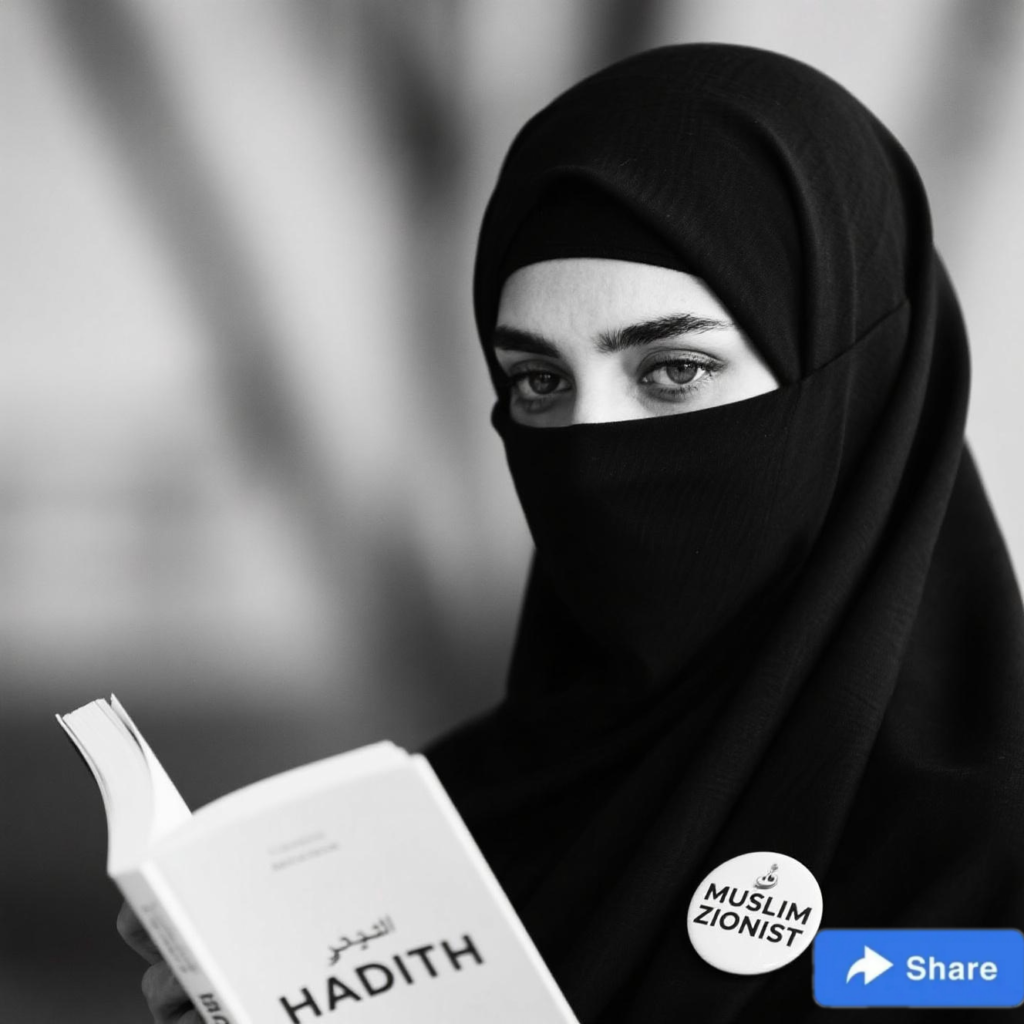
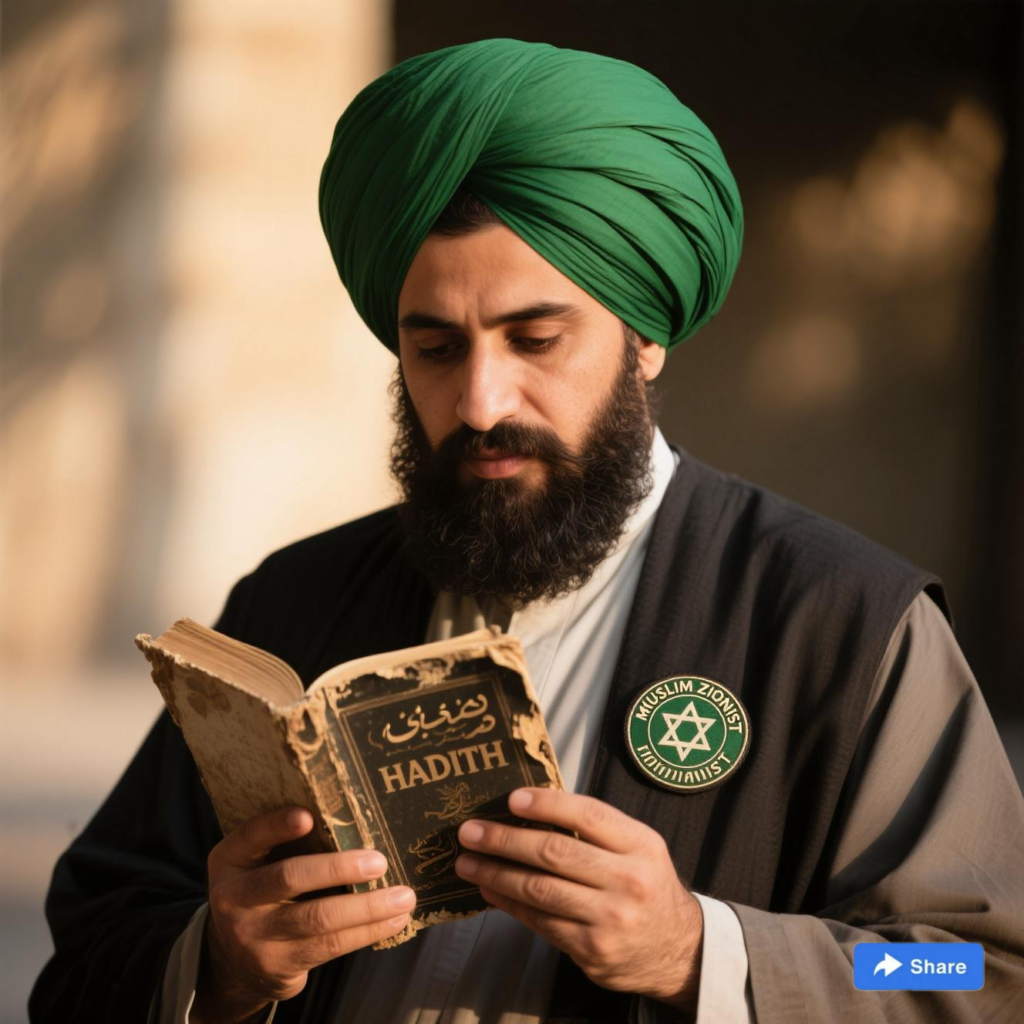
A star is born
GOD KNOWS.
ARTICLE
/VI
WHERE DO YOU REALLY COME FROM?
GOD KNOWS.
ARTICLE



A Star is born.
“Peace be upon me the day I was born, and the day I will die, and the day I am raised alive.” Jesus. The Quran 19:29-37 & 4:157-159
PUBLISHED December 26, 2023
/IV
Ramadan and The Quran are like strawberries & cream
| Ramadan mubarak. Warning: Not Vegan but friendly enough. By Rafakut Ali APR 2022. Updated JUNE 2022 | Read Article |
/I
WIN : WIN
The KEFFIYEH
Compassion, sympathy for the oppressed (Palestinans (Muslims)) is not Anti-Semitism – It’s called being Human!!
Article by Rafakut Ali NOV 2021
/XII
REPENT > REFORM > REFRAIN
the ancient house of abraham
Indeed, the first House of worship established for mankind was The Ka’aba – blessed and a guidance for the world. Quran 3:96
Read Article by Rafakut Ali 2021 >
Eid-al-Hajj. Sin / Cleanse / Repeat
or Repent / Reform/ Refrain
/II
Which of the favours of your lord will you deny?
Check back soon
So then which of the favors of your Lord would you deny? Surah Rahman 55 x 31
/VII
POPPIES (NOT) FOR MUSLIMS
> READ MORE”>PAKIS HAD NOTHING TO DO WITH COVID-19 > READ MORE
Poppies (not) for muslims > Read Article by Rafakut Ali NOV 2021
Muslim lives matter – stop Islamophobia
/VII
WHat a piece of work is man
Quran 13:12 Surah Thunder
God shows you lightening, causing fear and hope, and generates heavy clouds.
Muslim lives matter – stop Islamophobia
/V
Which of the favours of your lord will you deny?
Check back soon
And if all the trees on earth became pens, with the sea replenished by seven more seas to supply them with ink, Gods words would not be exhausted. Verily God is Almighty, Most Wise. Quran 31:27
/III
Are you Awesome?
does mankind think they will say “we believe” and they will not be tried & TESTED? Quran 29:2

تقوى
تقوى / taqwá Mindfulness. Being conscious of God, God-cognizant. i.e. The Quran 2:2 is Guidance for the Mu’taq’een

gODSPEED CARS
Lorem ipsum dolor sit amet, consectetur.
/VIII
Which of gods mercy will you take ownership of?
Was not the Quran enough?
Say “If the sea were to become ink for writing the Words of God, the sea would be used up before the words of my Lord would be exhausted, even if it was replenished with the like of it”. Quran 18: 109
the Two seas meeting one another. between them a barrier so neither of them transgress. Quran 55:19,20
/IX
Woe to those who pray salah..
BUT ARE HEEDLESS IN their prayer. Quran 107:4,5.
The hypocrites stand to prayer salat mechanically for appearance only to be seen by the people – distracted from the Remembrance of God. Quran 4:142 (143)
/X
BLESSED lAND
Palestine
“Al-Aqsa mosque – the blessed land and surroundings” Quran 17:1
/XI
Which of the favours of your lord will you deny?
Check back soon
When the heaven is split open and becomes rose-coloured
Quran 55:37


