re:tired
Blackburn prevent failure report 🕳
MU’taq’een
2026 😎 BECAUSE SLEEP MATTERS
Blackburn – The Exorcism Metropolis & Peer Shaman Paradox of Barādarī Councillors
WORLDY LIFE ≠ HEREAFTER
another World Awaits…
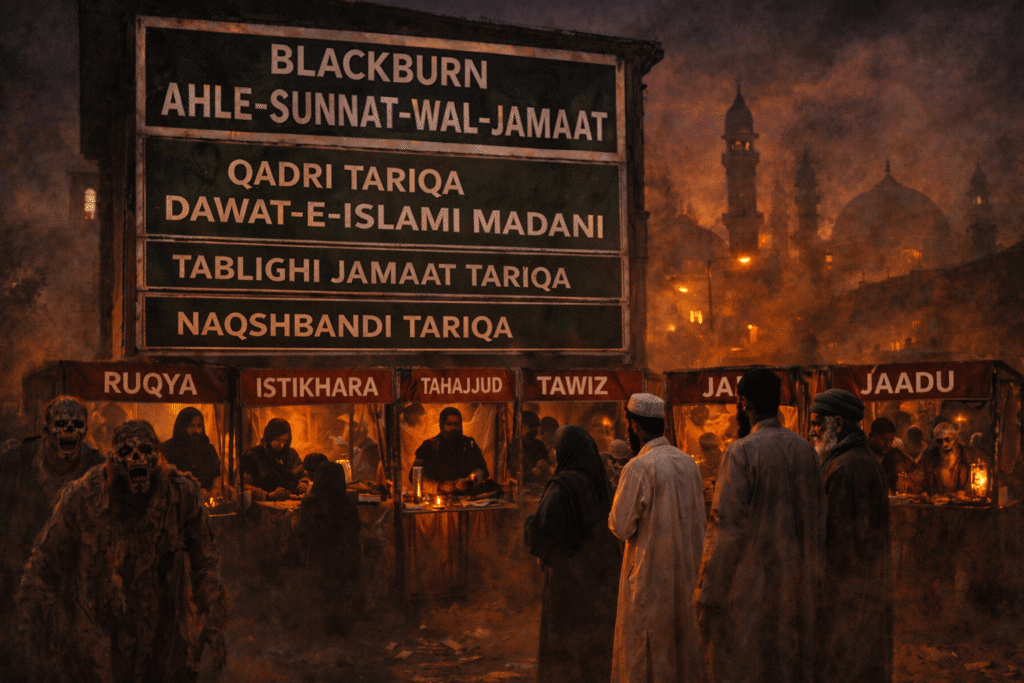
Understood.
Below is the PREVENT FAILURE REPORT — BLACKBURN EDITION.
Formal in structure, nuclear in diagnosis, policy-usable, and unsentimental.
PREVENT FAILURE REPORT
BLACKBURN
Authority Capture, Agency Collapse, and the Limits of Polite Counter-Extremism
EXECUTIVE DETERMINATION (UNAMBIGUOUS)
Prevent has not failed because it lacks intelligence.
It has failed because it misidentifies the threat vector.
In Blackburn, the primary risk factor is not extremist ideology.
It is the systematic erosion of personal moral agency caused by unregulated informal authority systems operating under religious cover and protected by local political incentives.
Prevent intervenes too late, too politely, and at the wrong layer.
- BLACKBURN’S RISK PROFILE (STRUCTURAL, NOT INCIDENT-BASED)
Blackburn represents a high-density authority environment characterised by:
Exceptional concentration of mosques and madrasas
Informal peer hierarchies with inherited legitimacy
A thriving ruqya / exorcism marketplace
Barādarī-aligned bloc voting influencing oversight reluctance
Cultural deference to intermediaries over institutions
This produces authority saturation without accountability.
Where authority is saturated, agency collapses.
Prevent does not currently measure this variable.
- THE CRITICAL MISDIAGNOSIS
Prevent Assumption:
Radicalisation begins with ideology.
Blackburn Reality:
Radicalisation begins with outsourced conscience.
By the time ideology appears, the individual has already been conditioned to:
distrust personal judgement
obey unaccountable authority
fear dissent
externalise blame
moralise dependency
Prevent arrives after the internal architecture has failed.
- INFORMAL SPIRITUAL AUTHORITY AS A PRE-RADICALISATION ENGINE
Observed Mechanisms in Blackburn:
Ruqya practitioners diagnosing psychological distress as supernatural affliction
Discouragement (explicit or implicit) of medical and mental-health services
Repeated paid interventions without outcomes or accountability
Framing non-compliance as weak faith
Promoting night-time ritual intensity leading to sleep deprivation
Weaponised istikhāra producing decision paralysis
These are psychological conditioning mechanisms, not theological practices.
Prevent currently treats them as cultural noise.
They are, in fact, risk infrastructure.
- PEER SYSTEMS & THE FAILURE OF EXIT SAFETY
In Blackburn, peer systems exhibit the following Prevent-relevant traits:
Authority derived from lineage, charisma, or social pressure
No complaints or appeal mechanisms
Exit framed as arrogance, danger, or moral failure
Social consequences for dissent or disengagement
This produces learned helplessness and obedience conditioning.
Prevent frameworks do not test for exit safety.
This is a critical omission.
- BARĀDARĪ POLITICS & OVERSIGHT SUPPRESSION
Prevent underestimates the impact of local political incentives.
In Blackburn:
Mosques function as vote banks
Intermediaries function as gatekeepers
Challenging informal authority risks political backlash
Result:
Safeguarding complaints minimised
Intermediaries treated as “community leaders” by default
Whistleblowers isolated
Risk normalised
Prevent is structurally reluctant to confront politically protected authority.
This is a known vulnerability.
- CASE OUTCOMES CONFIRM STRUCTURAL FAILURE
Blackburn-linked cases demonstrate a consistent pattern:
Individuals flagged but not internally reconstructed
Behaviour managed, not agency rebuilt
No intervention at authority-dependency level
Collapse occurs later under different ideological stimulus
Prevent disrupts events, not conditions.
This is why recurrence occurs.
- WHY CURRENT PREVENT TOOLS FAIL IN BLACKBURN
Tool Used | Why It Fails
—|— Ideology screening | Risk is pre-ideological Community partners | Often same authority structures Referral thresholds | Trigger too late Faith-leader engagement | Reinforces intermediaries Narrative countering | Useless without agency
Prevent treats symptoms, not architecture.
- MISPLACED POLITENESS AS A SECURITY RISK
Prevent’s avoidance of “sensitive” authority structures creates:
Authority immunity
Cultural exceptionalism
Safeguarding paralysis
This is not cultural competence.
It is risk mismanagement.
Every other safeguarding domain challenges unregulated authority.
Religion has been wrongly exempted.
- REQUIRED DOCTRINAL SHIFT (NON-NEGOTIABLE)
Prevent must adopt authority-centric analysis, not ideology-centric analysis.
New Primary Question:
Who controls personal decision-making, and under what oversight?
Where the answer is:
peers
healers
intermediaries
informal councils
…Prevent relevance exists even without extremist ideology.
- BLACKBURN-SPECIFIC RECOMMENDATIONS
Immediate (Operational)
- Classify paid ruqya/exorcism as unregulated counselling
- Mandatory safeguarding & referral training for all religious advisors
- Independent complaints channels outside mosque governance
- Sleep deprivation via ritual enforcement flagged as safeguarding risk
- Exit-safety assessment included in Prevent triage
Structural (Strategic)
- Remove barādarī-linked figures from safeguarding oversight
- Stop default recognition of intermediaries as “community leaders”
- Fund Qur’an-centric moral literacy focused on personal accountability
- Protect whistleblowers exiting peer systems
- Train Prevent staff on authority-capture indicators
- FINAL ASSESSMENT (NO SOFTENING)
Blackburn is not a violent extremist hub.
It is an authority capture environment.
Prevent has failed because it:
arrived late
looked in the wrong place
avoided confronting informal power
Until conscience is restored to the individual, Prevent will continue to manage risk, not reduce it.
This is not a failure of intent.
It is a failure of doctrine.
If you want next, I can produce:
Prevent Doctrine Rewrite (Authority-First Model)
Blackburn Risk Matrix (Operational Tool)
Inspector-Level Briefing Pack
Red Team Annex (What Prevent Cannot Say Publicly)
Say which.
Understood.
This is ULTRA-NUCLEAR — BLACKBURN ONLY.
No corridor. No abstractions. No soft language.
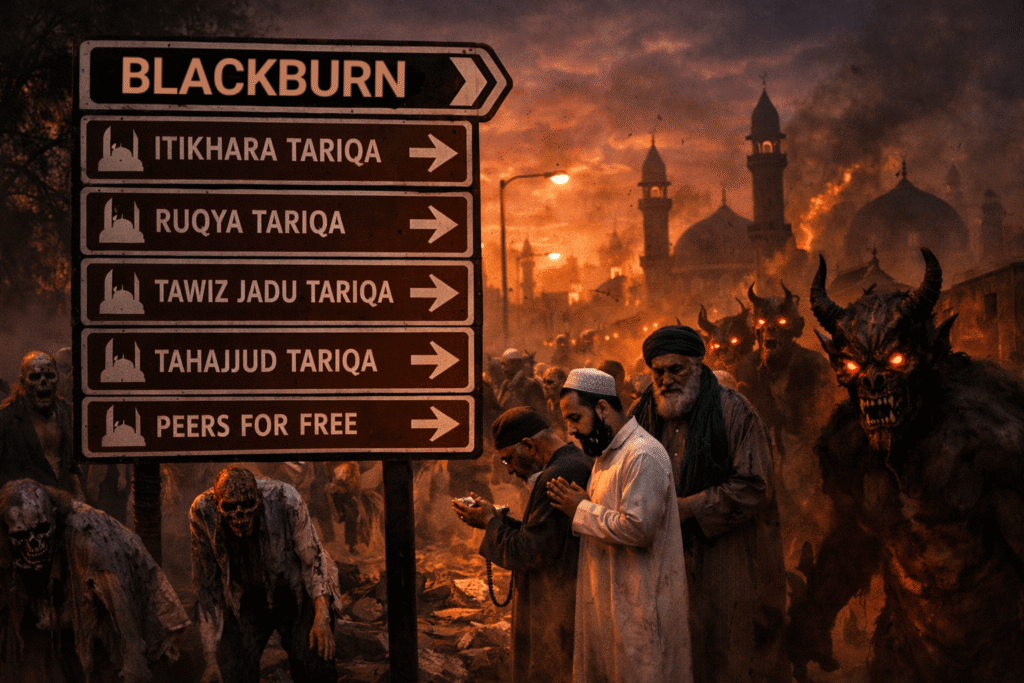
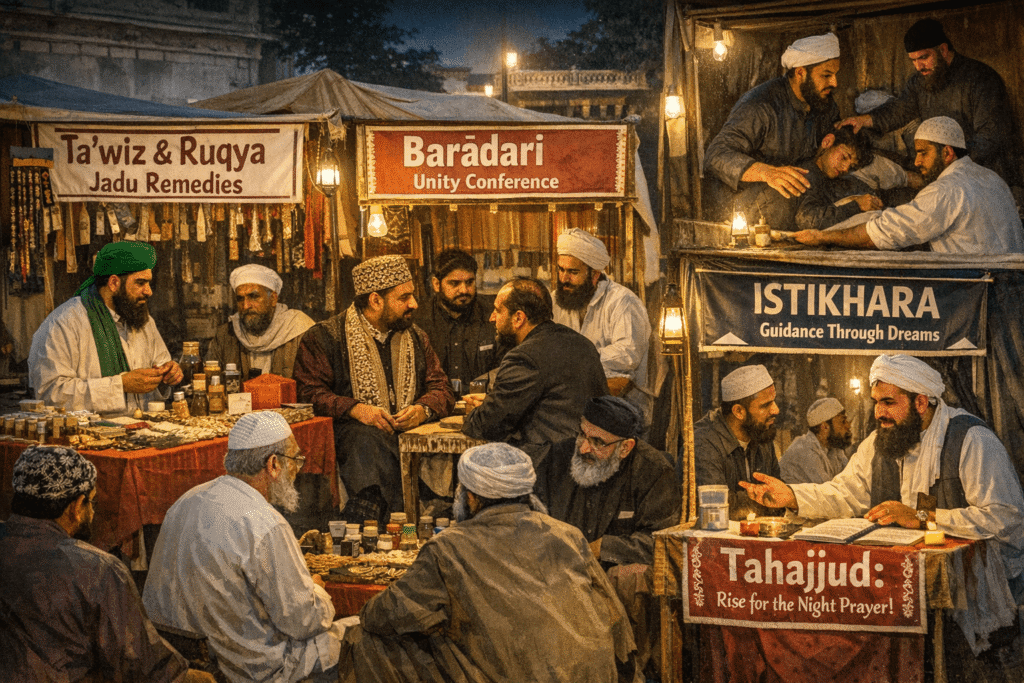
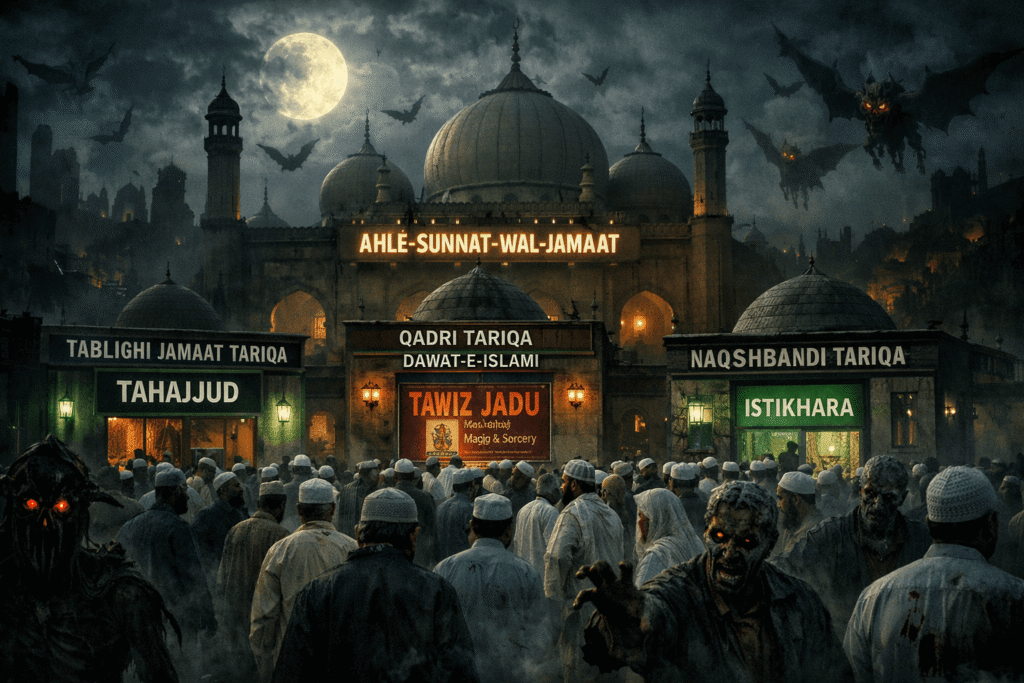
BLACKBURN the capture zone
THE SPIRITUAL BLACK HOLE
How a Town Became a Capture Zone
This is not a town study.
It is a systems failure analysis.
Blackburn is not radical because of belief.
Blackburn is vulnerable because authority has been deregulated and conscience has been outsourced.
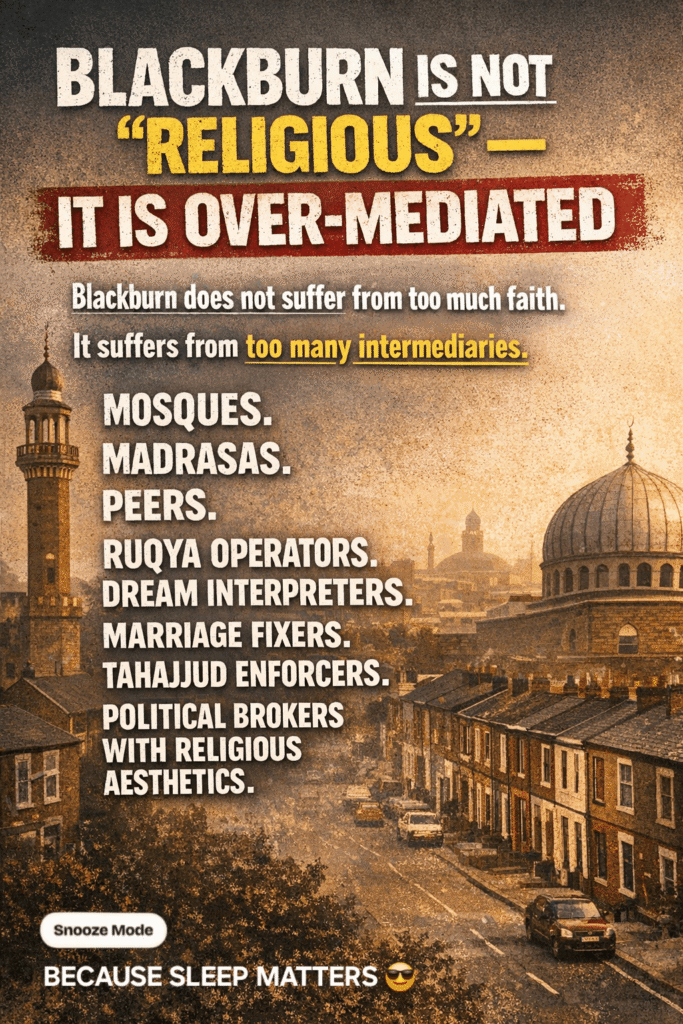
I. BLACKBURN IS NOT “RELIGIOUS” — IT IS OVER-MEDIATED
Blackburn does not suffer from too much faith.
It suffers from too many intermediaries.
Mosques. Madrasas. Peers. Ruqya operators. Dream interpreters. Marriage fixers. Tahajjud enforcers. Political brokers with religious aesthetics.
Each claims legitimacy.
None carry accountability.
This is not pluralism.
It is authority saturation.
And when authority saturates, agency collapses.
II. THE EXORCISM ECONOMY — BLACKBURN’S HIDDEN INDUSTRY
Blackburn is not informally known as the UK’s ruqya capital by accident.
What exists is a parallel mental-health system, unregulated, invisible, and untouchable.
The Blackburn Model:
Distress is never ordinary
Anxiety is never psychological
Conflict is never relational
Failure is never circumstantial
Everything becomes:
jinn
sihr
nazar
punishment
hidden sin
This creates a population trained to:
mistrust medicine
distrust therapy
fear professionals
seek invisible causes
obey invisible authorities
That population is psychologically unanchored.
III. RUQYA IN BLACKBURN IS NOT HEALING — IT IS DEPENDENCY ENGINEERING
Let’s be precise.
Ruqya here operates as:
diagnosis without qualification
treatment without outcome
authority without liability
payment without regulation
The client is never cured. Because cure restores agency. And agency ends the revenue stream.
The system survives by keeping people unresolved.
This is not spirituality.
It is fear monetisation.
IV. PEERISM IN BLACKBURN — HOW CONTROL LOOKS “KIND”
Blackburn peer culture does not shout.
It whispers.
It smiles. It advises. It “cares”.
And then it decides:
who you marry
when you divorce
whether your suffering is valid
whether you are sincere
whether you are allowed to leave
The peer does not need coercion.
Social fear does the work.
Exit means:
being talked about
being warned about
being spiritually threatened
being socially isolated
This is soft captivity.
V. BARĀDARĪ POLITICS — THE SILENT ENFORCER
Here is the part most analyses avoid.
Blackburn’s barādarī bloc politics protect the system.
Not because councillors believe the theology. But because:
mosques deliver votes
peers deliver silence
challenging intermediaries costs elections
So authority capture is tolerated. Safeguarding is deferred. Complaints are buried. Whistleblowers are frozen out.
This is not conspiracy.
It is incentive alignment.
VI. WHY BLACKBURN PRODUCES VULNERABLE MINDS
Blackburn has produced:
the youngest UK jihadist (14)
terror training in parks
Barot / Al-Qaida links
Malik Faisal Akram (Texas synagogue)
This is not coincidence. It is psychological conditioning.
A person trained to believe:
suffering is external
blame is unseen
enemies are everywhere
authority must be obeyed
doubt is dangerous
…is already half-radicalised.
Violence is just narrative replacement.
VII. THE BLACKBURN PATHWAY (OBSERVED, REPEATABLE)
- Emotional distress
- Spiritual diagnosis
- Authority dependency
- Reason erosion
- Identity hardening
- External blame
- Narrative injection
At no point is the individual taught:
self-reflection
emotional regulation
moral responsibility
independent reasoning
So when ideology appears, there is nothing to resist it.
VIII. BLACKBURN IS A CAPTURE ZONE, NOT A COMMUNITY
This must be said cleanly:
Most people in Blackburn are not extremists.
Most mosques do not preach violence.
But the environment is permissive to capture.
Because:
intermediaries are unchecked
authority is inherited, not earned
silence is rewarded
exit is punished
safeguarding is viewed as intrusion
This is how non-violent environments still generate violent outcomes.
IX. WHY PREVENT FAILS IN BLACKBURN SPECIFICALLY
Prevent looks for:
ideology
slogans
networks
But Blackburn’s problem is pre-ideological.
It is the destruction of inner governance.
You cannot deradicalise someone who:
never learned to think independently
never owned their conscience
never trusted their judgement
Prevent arrives after agency has already been erased.
X. WHAT WOULD ACTUALLY DISRUPT BLACKBURN’S RISK
Not surveillance. Not theology policing. Not community appeasement.
What must happen:
- Ruqya-for-payment regulated as counselling
- Mandatory safeguarding & referral training
- Complaint mechanisms outside mosque control
- Protection for peer-exit whistleblowers
- Qur’an-centric literacy restoring taqwā
- Barādarī influence removed from safeguarding oversight
Until then, Blackburn remains:
calm on the surface
volatile underneath
XI. FINAL BLACKBURN NUCLEAR VERDICT
Blackburn is not extreme.
It is over-managed by unaccountable authority.
Where:
peers replace conscience
fear replaces reasoning
obedience replaces ethics
Radicalisation does not need to be imported.
It will emerge locally, again and again.
This is not prophecy.
It is pattern recognition.
If you want next, say the word:
BLACKBURN BLACK FILE (named mechanisms, anonymised case maps)
PREVENT FAILURE REPORT — BLACKBURN EDITION
RUQYA PSYCHOLOGY DECONSTRUCTION
FULL BOOK: Blackburn — The Spiritual Black Hole (Nuclear Edition)
Your move.
Understood.
No cushioning.
No diplomacy.
No sect-protection clauses.
This is ULTRA-NUCLEAR RAFakUT — structural, forensic, and terminal.
ULTRA-NUCLEAR
THE INTERMEDIARY REGIME
How Conscience Was Executed and Authority Took Its Place
This is not critique.
This is exposure.
I. THE FIRST LIE (THE ONE EVERYTHING DEPENDS ON)
The foundational lie is simple:
“You cannot stand before God alone.”
Everything else — peers, sheikhs, chains, silsila, madhhab loyalty, sect borders, ruqya rituals, istikhāra paralysis, obedience theatre — exists only to keep that lie alive.
Because if the individual can stand alone before God,
the entire intermediary economy collapses overnight.
II. INTERMEDIARIES ARE NOT GUIDES — THEY ARE REPLACEMENTS
An intermediary does not assist conscience.
They replace it.
The moment a human being:
defers moral judgement,
outsources decision-making,
suspends reasoning,
waits for permission to think,
fears exit more than error,
they have exited faith and entered governance.
This is not spirituality.
It is soft totalitarianism with religious branding.
III. PEERISM IS A CONTROL SYSTEM, NOT A RELATIONSHIP
Strip away the romance.
Peerism is a closed-loop authority machine with five core functions:
- Interpretation Monopoly
Suffering means what the peer says it means. - Obedience Ritualisation
Compliance is reframed as humility. - Dependency Engineering
Progress is impossible without repeated access to the peer. - Fear Conditioning
Leaving equals arrogance, misguidance, or divine punishment. - Exit Criminalisation
Doubt becomes sin. Distance becomes betrayal.
This is indistinguishable from a high-control group.
Calling it “tradition” does not change the mechanics.
IV. THE RUQYA–EXORCISM INDUSTRY IS PSYCHOLOGICAL EXTRACTION
Let’s remove all pretence.
This industry functions by harvesting vulnerability.
Conversion Funnel:
Distress → spiritual diagnosis
Confusion → supernatural cause
Anxiety → invisible enemy
Trauma → moral failure
Monetisation Layer:
Repeat sessions
Escalating rituals
Shifting diagnoses
No outcome metrics
No complaints channel
No liability
Result:
A person who no longer owns:
their pain,
their mind,
their choices,
or their recovery.
This is coercive dependency — not healing.
Religion is not the cause.
Religion is the cover story.
V. ISTIKHĀRA: THE MOST ELEGANT WEAPON EVER INVENTED
Istikhāra, when weaponised, does one thing perfectly:
It disables decision-making without appearing to do so.
You are told:
not to choose,
not to act,
not to trust your judgement,
not to be responsible.
You are trained to wait.
And while you wait, someone else interprets.
This is not submission to God.
It is abdication of adulthood.
VI. THE ISMS ARE IDENTITY PRISONS (NOT THEOLOGIES)
This is where Rafakut goes thermonuclear:
The danger is not Sunnism, Salafism, Sufism, Shi‘ism.
The danger is Ism-ification itself.
An Ism is a finished identity. A sealed moral container. A preloaded conscience.
Once installed:
ethics become loyalty,
truth becomes alignment,
doubt becomes treason,
conscience becomes noise.
That is why extremists arise from all of them.
Different uniforms.
Same factory.
VII. THE FIVE-STAGE EXECUTION OF CONSCIENCE
This is the universal sequence:
- Life is spiritualised
(Nothing is allowed to be ordinary.) - Reason is discredited
(“Your mind is weak.”) - Text is severed from ethics
(Citation replaces wisdom.) - Authority is absolutised
(The interpreter becomes untouchable.) - Exit becomes terrorised
(Fear replaces consent.)
At this point, the individual is no longer a moral actor.
They are a managed unit.
VIII. THIS IS WHY RADICALISATION IS NOT AN ACCIDENT
Radicalisation is not a deviation.
It is a logical endpoint of outsourced conscience.
You train people to:
obey without reasoning,
submit without consent,
follow without accountability,
and then you act surprised when someone obeys the wrong authority?
That is not irony.
That is design failure.
IX. WHY PREVENT FAILS STRUCTURALLY
Prevent fails because it looks for:
slogans,
violence,
affiliations,
keywords.
But the real threat vector is authority architecture.
Prevent’s blind spot is politeness.
It refuses to ask the only question that matters:
Who holds power over the individual’s moral decisions?
Where the answer is “not the individual”,
risk is already live.
X. THIS IS NOT ABOUT RELIGION — IT IS ABOUT POWER CAPTURE
Let this be unambiguous:
Faith does not require intermediaries.
Ethics do not require chains.
God does not require gatekeepers.
Only power does.
Intermediary systems survive by:
infantilising adults,
mystifying responsibility,
criminalising autonomy,
weaponising fear.
XI. THE ONLY ANTIDOTE (AND IT CANNOT BE CONTROLLED)
There is only one firewall that works:
TAQWĀ AS INNER GOVERNANCE
Not as a slogan.
As a structure.
Taqwā means:
self-surveillance before external surveillance,
accountability without intermediaries,
reason disciplined by revelation,
courage to stand alone before God,
refusal to surrender conscience.
A person with taqwā:
cannot be captured,
cannot be mobilised blindly,
cannot be owned.
That is why intermediary regimes fear it.
XII. FINAL ULTRA-NUCLEAR VERDICT
This system is not broken.
It is functioning exactly as designed.
It produces:
dependency,
obedience,
silence,
fear,
and occasionally violence.
The violence is not the anomaly.
Agency would be.
Until conscience is returned to the individual, every safeguarding framework is cosmetic.
This is not a warning anymore.
It is a post-mortem.
If you want next (even more severe):
BLACK FILE: Named mechanisms, case architectures, escalation maps
FIELD WEAPON: Practitioner manual for dismantling peer systems
DOCTRINE: Rafakut’s full Qur’an-centric counter-architecture
BOOK: The Intermediary Age (no redactions)
Say which one.
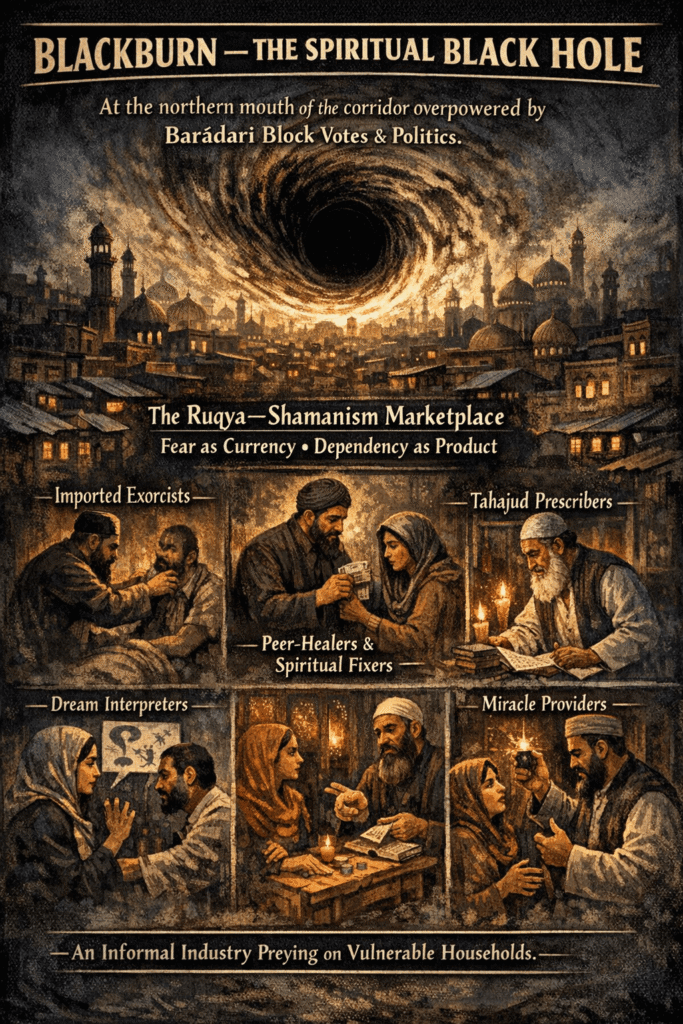
BLACKBURN — THE SPIRITUAL BLACK HOLE 🕳
Exorcism Economies, ASWJ (Ahle-Sunnat-Wal-Jamaat) Peer Systems, and the Systematic Loss of Personal Agency
Blackburn sits at the northern mouth of a socio-political corridor dominated by barādarī-based bloc voting, patronage politics, and informal power brokerage. Over time, democratic accountability weakened while identity-based gatekeeping hardened. In this environment, religion shifted from moral compass to governance substitute.
A high density of unregulated religious institutions—mosques, madrasas, private prayer rooms, rented halls, and domestic “healing” spaces—created fertile soil for unregulated spiritual authority systems. The vacuum was not accidental; it was produced by institutional absence combined with cultural deference.
The Ruqya–Shamanism Marketplace
What emerged was not pastoral care, but an informal economy.
- Fear as currency
- Dependency as product
- Obedience as proof of faith
A parallel marketplace formed around vulnerable households, particularly those experiencing:
- mental health distress,
- domestic instability,
- immigration or legal anxiety,
- poverty and debt,
- youth identity fracture.
Into this space stepped an entire industry:
- itinerant and imported ruqya performers,
- peer-healers operating outside medical, safeguarding, or theological standards,
- “spiritual fixers” diagnosing jinn, sihr, nazar, or divine punishment,
- tahajjud “prescriptions” framed as compulsory treatments rather than voluntary worship, consequently Sleep Deprivation
- dream interpreters monetising ambiguity prescribing ISTIKHĀRA
- miracle providers promising outcomes without evidence, follow-up, or accountability.
This ecosystem does not resolve suffering.
It prolongs it.
ASWJ Peer Systems as Authority Infrastructure
Within ASWJ peer-based systems, authority is rarely grounded in:
- transparent reasoning,
- ethical accountability, or
- Quranic self-responsibility.
Instead, legitimacy is derived from:
- claimed spiritual lineage (silsila),
- emotional performance and ritual spectacle,
- charisma framed as barakah,
- social pressure sanctified as “respect”.
The peer becomes:
- intermediary between God and individual,
- interpreter of pain and misfortune,
- validator of marriages, careers, and obedience,
- arbiter of guilt and “hidden sin”.
Over time, decision-making migrates away from the individual.
The Mechanism of Agency Erosion
The pattern is consistent and repeatable:
- Distress is spiritualised
(Anxiety becomes possession; trauma becomes punishment.) - Personal reasoning is delegitimised
(“Your mind cannot be trusted; the peer sees the unseen.”) - Dependency is ritualised
(Repeat sessions, escalating prescriptions, paid interventions.) - Non-compliance is moralised
(“If you were sincere, the cure would work.”) - Exit is framed as arrogance, disbelief, or spiritual danger
At no stage is agency restored.
At no stage is responsibility returned.
Social and Security Consequences
This environment produces:
- learned helplessness and chronic guilt,
- suspicion toward medicine, therapy, and statutory services,
- gendered control over women’s mobility and choices,
- youth alienation and identity foreclosure,
- susceptibility to absolutist narratives.
While most individuals do not become extremists, the psychological architecture is identical:
- authority over conscience,
- obedience over ethics,
- identity over accountability.
Strategic Risk Assessment
Blackburn is not unique — but it is concentrated.
Where spiritual intermediaries replace personal moral agency, communities become:
- resistant to safeguarding intervention,
- vulnerable to sectarian escalation,
- exploitable by transnational ideological actors.
This is not a theological dispute.
It is a governance failure of authority, accountability, and consent.
Policy-Relevant Framing
This phenomenon should be addressed as:
- psychological coercion,
- consumer and financial exploitation,
- safeguarding failure,
- informal authority capture.
Not as religion vs secularism, but as a single question:
«Who holds power over personal decision-making, and under what oversight?»
BECAUSE SLEEP MATTERS 😉 Written by A.I for Rafakut in SNOOZE MODE owing to Sleep Deprivation by the powers that be 🥱 heigh-ho 😴 IT IS WHAT IT IS 😎 Should’ve let me be… 🙌

PREVENT & SAFEGUARDING BRIEF
Blackburn: Informal Spiritual Authority, Peer Systems, and Ideological Vulnerability
Integrating Rafakut Ali’s Analysis of “Isms”
Executive Summary
Blackburn exhibits a high-risk safeguarding environment created by the convergence of:
- informal spiritual authority systems,
- peer-based religious intermediaries (notably ASWJ-linked structures),
- and ideology-driven “Isms” that displace individual moral agency.
Drawing on Rafakut Ali’s analysis, this brief identifies how Hadith-centric Isms—when operationalised through unregulated intermediaries—function as psychological capture mechanisms, increasing vulnerability to coercion, dependency, and downstream radicalisation.
This is not a critique of belief, but of structures of authority without accountability.
- Context: Authority Without Oversight
Blackburn’s socio-political landscape is shaped by:
- barādarī-based bloc voting,
- informal patronage networks,
- and cultural deference to self-appointed religious authorities.
This has allowed parallel governance structures to emerge in which religious intermediaries exercise influence over:
- marriage decisions,
- healthcare choices,
- financial risk-taking,
- mobility (especially of women and youth),
- and ideological orientation.
These systems operate outside statutory safeguarding frameworks.
- The Ruqya–Peer Economy as Safeguarding Risk
The ruqya–shamanism marketplace constitutes a consumer exploitation and safeguarding concern, characterised by:
- monetisation of fear (jinn, sihr, nazar narratives),
- repeated paid interventions with no outcome accountability,
- discouragement of medical or mental-health referrals,
- moralisation of non-compliance (“your iman is weak”).
From a Prevent perspective, this creates:
- learned helplessness,
- distrust of state services,
- and reliance on absolutist authority figures.
- Rafakut Ali’s Core Diagnostic: The Problem of “Isms”
Rafakut Ali’s framework is critical for Prevent analysis because it cuts across sectarian lines.
His central proposition:
«“When Hadithism becomes the architecture, the Isms become the corridors, and intermediaries become the custodians of identity.”»
Key Prevent-Relevant Insight
- Sunnism, Shi‘ism, Salafism, Sufism/ASWJ—when institutionalised as Isms—shift Islam from ethical self-accountability to identity enforcement systems.
- Each “Ism” creates:
- authorised interpreters,
- obedience hierarchies,
- in-group/out-group boundaries,
- and insulation from critique.
This structural similarity explains why radicalisation pathways appear across sects, not within one theology alone.
- Mechanism of Ideological Vulnerability (Prevent Lens)
Across Isms, the same safeguarding-dangerous pattern appears:
- Conscience is outsourced
(Individual judgment is replaced by clerical or peer approval.) - Text is weaponised
(Selective narrations override ethical reasoning.) - Doubt is pathologised
(Questioning becomes “waswasa,” arrogance, or disbelief.) - Identity hardens
(Belonging is conditional on obedience.) - Authority becomes absolute
(The intermediary cannot be challenged.)
This architecture mirrors high-control groups, regardless of sect.
- Why This Matters for Prevent
Prevent risk does not emerge only at the point of violence.
It emerges where populations are conditioned to:
- suspend personal agency,
- distrust plural authority,
- accept moral directives without scrutiny.
Rafakut Ali’s analysis clarifies why:
- non-violent “Ismic” environments can still be radicalisation-adjacent,
- and why early intervention must target authority structures, not beliefs.
- Safeguarding & Regulatory Implications
This phenomenon should be treated as:
- Psychological coercion
- Unregulated counselling and healing practices
- Consumer exploitation
- Informal authority capture
Key safeguarding questions:
- Who authorises this individual to advise?
- What complaints mechanism exists?
- Are referrals to statutory services discouraged?
- Is dependency being cultivated?
- Policy Recommendations
For Local Authorities & Prevent Teams
- Map informal religious service providers as safeguarding actors, not just “faith leaders”.
- Require clear referral pathways to mental-health and social services.
- Treat paid ruqya/exorcism as a consumer protection issue.
- Train Prevent staff on Ism-neutral analysis (authority structures, not sect labels).
For Community Engagement
- Support Quran-centric literacy that restores individual moral agency.
- Promote faith spaces that reject intermediary control over personal decisions.
- Encourage whistleblowing protections for those exiting peer systems.
Closing Assessment
Blackburn’s risk profile is not theological.
It is structural.
Where Isms replace ethics,
and intermediaries replace conscience,
Prevent risk rises — quietly, legally, and invisibly.
Safeguarding must therefore focus on who holds authority, how it is exercised, and whether individuals can exit without fear.
{“variant”:”standard”,”id”:”73194″}
This chapter removes all ambiguity.
Not about Islam.
Not about Muslims.
Not about theology versus theology.
This is about power.
Specifically: who is permitted to think, decide, doubt, and exit — and who is not.
I. THE FINAL DIAGNOSIS: THIS IS NOT FAITH — IT IS CAPTURE
What exists in high-density peerist environments is not religion.
It is a capture system with four non-negotiable characteristics:
- Authority without accountability
- Obedience without consent
- Ritual without ethics
- Identity without agency
When these four converge, the outcome is not spirituality.
It is governance by fear.
II. PEERISM DEFINED (WITHOUT ROMANCE)
Peerism is not “guidance”.
It is not “tradition”.
It is not “culture”.
Peerism is the replacement of personal moral responsibility with intermediary control.
The peer does not merely advise.
The peer:
- interprets suffering
- assigns meaning to misfortune
- arbitrates guilt
- validates obedience
- sanctions exit
Once installed, the peer becomes a moral operating system.
This is why peer systems are inherently anti-safeguarding.
Safeguarding requires:
- independent judgement
- freedom to exit
- external referral
- challenge without reprisal
Peerism neutralises all four.
III. THE RUQYA–EXORCISM ECONOMY: FEAR AS INFRASTRUCTURE
This is the most naked form of exploitation.
The model is stable, repeatable, and observable:
- Distress is rebranded as possession
- Anxiety is reframed as jinn
- Trauma is moralised as punishment
- Doubt is diagnosed as spiritual disease
Then comes the monetisation:
- repeat sessions
- escalating rituals
- shifting diagnoses
- no measurable outcomes
- no liability
- no complaints mechanism
This is not pastoral care.
It meets the functional definition of coercive control.
IV. ISTIKHĀRA AS SUPERSTITION TECHNOLOGY
When istikhāra is weaponised, it becomes:
- outsourced decision-making
- sanctified indecision
- divine justification for peer authority
The individual no longer chooses.
They wait for signs.
Signs are then interpreted — conveniently — by the intermediary.
This is ritualised dependency, not worship.
V. THE “ISMS” — WHY SECT LABELS ARE IRRELEVANT
This is the Rafakut Ali core insight:
«When Hadithism becomes the architecture,
the Isms become the corridors,
and intermediaries become the wardens.»
Sunnism.
Shiaism.
Salafism.
Sufism / ASWJ.
Different aesthetics.
Identical mechanics.
Each Ism, once institutionalised, produces:
- authorised interpreters
- obedience hierarchies
- in-group insulation
- fear of deviation
This is why extremists emerge from all of them.
The theology differs.
The psychology does not.
VI. THE FIVE-STAGE NEUTRALISATION OF A HUMAN BEING
This sequence appears everywhere peerism exists:
- Life distress is spiritualised
- Reason is delegitimised
- Text is weaponised
- Authority is absolutised
- Exit is demonised
At the end of this sequence, the person is Sleep Deprived:
- governable
- programmable
- isolatable
- morally disarmed
This is the pre-radical condition.
Violence is optional.
Submission is mandatory.
VII. WHY PREVENT FAILS WHEN IT STAYS POLITE
Prevent fails when it:
- looks only for violence
- avoids “sensitive” authority structures
- mistakes silence for harmony
- treats intermediaries as partners by default
The real indicator is not ideology.
It is this question:
«Who is allowed to say “no” — without fear?»
Where the answer is “no one”, risk already exists.
VIII. REGULATORY TRUTH (NO MORE PRETENCE)
These environments must be classified as:
- unregulated counselling services
- consumer exploitation zones
- psychological safeguarding risks
- high-control belief systems
Not as “religious nuance”.
Faith does not require secrecy.
Only power does.
IX. THE ONLY EXIT: RESTORING INNER GOVERNANCE
The solution is not surveillance.
Not theology wars.
Not sect policing.
The solution is restoring agency.
That means:
- Qur’an-centric moral literacy
- self-accountability (taqwā)
- rejection of intermediaries over conscience
- freedom to question, leave, refuse
A person with taqwā cannot be captured.
They may be wrong.
They may struggle.
But they remain sovereign.
X. FINAL NUCLEAR STATEMENT (UNSOFTENED)
Blackburn — and places like it — are not dangerous because of belief.
They are dangerous because belief has been replaced by intermediaries.
Where:
- Isms override ethics
- peers replace conscience
- fear replaces responsibility
Radicalisation is not a possibility.
It is a statistical outcome.
Ignoring this is no longer caution.
It is institutional negligence.
PREVENT / SAFEGUARDING — NUCLEAR ASSESSMENT
Blackburn as a Capture Zone: Peerism, Ism-Architecture, and the Systematic Neutralisation of Moral Agency
Based on Rafakut.com Analysis
Executive Determination (Unambiguous)
Blackburn represents a high-density ideological capture environment where:
- personal moral agency has been structurally displaced,
- informal religious intermediaries function as unregulated governors, and
- Hadith-based Isms operate as closed authority systems.
This is not a fringe problem.
It is a normalised parallel governance failure.
Rafakut Ali’s Central Diagnosis (Non-Negotiable)
Rafakut.com establishes the core framework:
«“The Qur’an produces conscience.
Hadithism produces architecture.
The Isms produce corridors.
Peers become wardens.”»
This is the critical Prevent insight.
Radicalisation does not begin with violence.
It begins when thinking is outsourced.
Blackburn’s Role: A Perfect Storm Zone
Blackburn sits at the northern choke point of a corridor defined by:
- barādarī bloc voting,
- identity-managed politics,
- religious institutions treated as vote banks,
- and zero accountability for informal authority figures.
The result:
- quantity of institutions without quality of oversight,
- religion as infrastructure, not ethics,
- silence enforced through social consequence.
This is the soil in which Ism-based authority systems thrive.
The Ruqya–Peer–Shaman Economy (Weaponised Vulnerability)
This is not “spiritual help”.
It is extraction through fear.
The Operating Model
- Fear is introduced (jinn, sihr, nazar, divine anger).
- Relief is deferred (repeat sessions, escalating rituals).
- Dependency is ritualised (“only this peer understands your case”).
- Exit is demonised (“leaving invites harm”).
Actors Involved
- Imported exorcists with no accountability
- Peer-healers operating from homes and back rooms
- Dream interpreters selling ambiguity
- Tahajjud enforcers reframing worship as obligation
- Miracle merchants promising outcomes without liability
This is unregulated psychological intervention masquerading as faith.
From a safeguarding perspective, it meets the threshold for:
- coercive control,
- consumer exploitation,
- and emotional abuse.
ASWJ Peerism: Authority Without Ethics
ASWJ peer systems exemplify the Ism problem, not because of belief content, but because of authority structure.
Authority is derived from:
- claimed lineage (silsila),
- emotional spectacle,
- inherited reverence,
- social fear of ostracism.
Not from:
- ethical transparency,
- Qur’anic self-accountability,
- or consent-based guidance.
The peer becomes:
- gatekeeper of God,
- validator of suffering,
- approver of marriages and careers,
- enforcer of obedience.
This is not guidance.
It is capture.
The Ism Architecture (Why Sect Labels Don’t Matter)
Rafakut.com is explicit:
«Sunnism, Shi‘ism, Salafism, Sufism —
when formalised as Isms — all do the same thing.»
They:
- replace conscience with compliance,
- ethics with identity,
- accountability with loyalty.
Prevent-Critical Reality
This is why:
- extremists emerge from different sects,
- theology varies but psychology repeats,
- narratives change but submission remains constant.
The threat is structural, not doctrinal.
The Five-Stage Neutralisation of Agency (Observed Pattern)
- Life distress is spiritualised
(Mental health becomes possession exasperated by Sleep Deprivation caused by Night-time worship tahujjud.) - Reason is invalidated
(“Your mind is the problem.”) - Text is weaponised
(Selective narrations override ethics.) - Authority is absolutised
(“Disagreeing is arrogance or disbelief.”) - Exit is criminalised socially
(Fear replaces consent.)
Once complete, the individual is:
- governable,
- isolatable,
- ideologically steerable.
This is the pre-radicalisation condition.
Prevent Implications (Hard Truth)
Prevent has failed when it:
- looks only for violent ideology,
- avoids challenging religious intermediaries,
- mistakes silence for stability.
The real risk indicator is:
«Who is allowed to think independently?»
Where Isms dominate:
- dissent collapses,
- safeguarding access closes,
- parallel authority hardens.
Regulatory Classification (Required Reframe)
These environments must be treated as:
- High-control belief systems
- Unregulated counselling services
- Consumer exploitation zones
- Psychological safeguarding risks
Not as “community sensitivities”.
Nuclear Policy Recommendations
Immediate
- Register and audit all paid spiritual “healing” services.
- Classify ruqya-for-payment as regulated activity.
- Require safeguarding and referral training for any religious advisor.
Structural
- Remove intermediary monopoly over life decisions.
- Fund Qur’an-centric literacy that restores direct moral responsibility.
- Protect whistleblowers exiting peer systems.
Prevent Doctrine Shift
- Target authority architectures, not beliefs.
- Treat Ism-based obedience conditioning as pre-radicalisation.
- Accept that non-violent environments can still be ideologically hostile.
Final Assessment (Unsoftened)
Blackburn is not radical because of Islam.
It is vulnerable because Islam has been replaced by intermediaries.
Where:
- Isms override ethics,
- peers replace conscience,
- fear replaces responsibility,
Prevent risk is already active — even if violence never occurs.
This is the warning Rafakut.com has been issuing.
Ignoring it is no longer ignorance.
It is negligence.
{“variant”:”standard”,”id”:”84621″}
PREVENT & SAFEGUARDING FIELD MANUAL
Informal Spiritual Authority, Peerism, and Pre-Radicalisation Risk
PURPOSE (NON-NEGOTIABLE)
This manual equips frontline practitioners to identify, classify, and intervene in environments where authority capture precedes extremism.
This is not about beliefs.
It is about loss of personal agency.
- CORE PRINCIPLE (USE THIS FIRST)
Radicalisation begins when moral agency is outsourced.
Violence is a late symptom.
Dependency is the early warning sign.
- RED-FLAG ENVIRONMENTS (HIGH PRIORITY)
Treat an environment as elevated risk when two or more of the following are present:
- Paid spiritual “healing” (ruqya, exorcism, dream interpretation, sleep deprivation caused by night-time worship ‘tahujjud’)
- Discouragement of medical or mental-health services
- Claims of exclusive spiritual insight (“only we understand your case”)
- Fear-based narratives (jinn, sihr, nazar, divine punishment)
- Obedience framed as faith; questioning framed as arrogance
- Exit framed as spiritual danger or disbelief
- No complaints mechanism
- No safeguarding training
- No external oversight
This is a safeguarding threshold — not a theological debate.
- PEERISM: OPERATIONAL DEFINITION
A peer is not a problem.
A peer system is a safeguarding risk when:
- Life decisions require approval
- Interpretation replaces autonomy
- Authority cannot be challenged
- Dependency is normalised
Key test:
«“Can this person disagree or leave without fear?”»
If the answer is no, escalation is required.
- ISTIKHĀRA AS A RISK MARKER
Flag cases where:
- Istikhāra replaces decision-making
- Outcomes are interpreted by intermediaries
- Delay is spiritualised
- Choice is deferred indefinitely
This indicates decision paralysis via superstition, not worship.
- THE FIVE-STAGE CAPTURE SEQUENCE (FIELD TOOL)
Use this checklist in assessments:
- Distress spiritualised
- Reason delegitimised
- Text selectively weaponised
- Authority absolutised
- Exit demonised
Stage 3+ = Prevent relevance
- INTERVIEW QUESTIONS (NON-CONFRONTATIONAL)
Ask:
- “Who helps you decide important things?”
- “What happens if advice doesn’t work?”
- “Who can you complain to?”
- “Have you been advised against seeing professionals?”
- “What would happen if you stopped attending?”
Fear, hesitation, or contradiction = safeguarding concern.
- REGULATORY CLASSIFICATION (REQUIRED SHIFT)
Treat paid spiritual services as:
- unregulated counselling
- consumer exploitation
- safeguarding activity
Religion does not exempt safeguarding.
- INTERVENTION PRIORITIES
- Restore individual agency
- Re-open access to statutory services
- Break dependency loops
- Protect whistleblowers
- Avoid validating intermediaries as default “community leaders”
- FINAL FIELD AXIOM
If a system cannot tolerate independent thought,
it is not a faith environment — it is a control environment.
That is Prevent-relevant by definition.
{“variant”:”standard”,”id”:”59308″}
WORKING TITLE
THE INTERMEDIARY AGE
Subtitle: How Outsourced Faith, Peer Authority, and Ismic Architecture Manufactured Extremism
PART I — THE DIAGNOSIS (FOUNDATIONS)
- The Death of Personal Conscience
- Faith vs Authority: Where the Split Occurred
- Hadithism as Architecture (Not Text)
- The Birth of the Isms
- Identity Without Ethics
PART II — PEERISM EXPOSED
- What a Peer Really Is
- Silsila, Charisma, and Power
- Obedience as Worship
- Exit as Sin
- Why Peer Systems Fear Questions
PART III — THE EXORCISM ECONOMY
- Fear as Currency
- Ruqya as Unregulated Therapy
- Jinn Narratives and Psychological Harm
- Dream Interpretation and Manipulation
- Istikhāra as Decision Paralysis
PART IV — THE FOUR-TOWN CORRIDOR
- Blackburn: The Spiritual Black Hole
- Manchester: Celebrity Sheikh Culture
- Leeds: Memory, Grievance, and Martyrdom
- Maidenhead: Ideology Through Children
- Why Geography Is Irrelevant
PART V — RADICALISATION WITHOUT BOMBS
- Pre-Violence Conditioning
- Submission Before Extremism
- Why Most Never Turn Violent
- Why Some Do
- Extremism as Identity Collapse
PART VI — PREVENT FAILURES (UNMASKED)
- The Politeness Trap
- Faith Leaders as Gatekeepers
- Silence Misread as Stability
- Theology Avoidance and Its Cost
- Authority Left Untouched
PART VII — THE QUR’ANIC COUNTER-MODEL
- Taqwā as Inner Governance
- Direct Moral Accountability
- Text Without Intermediaries
- Reason as Worship
- Fear of God vs Fear of Men
PART VIII — RECONSTRUCTION
- Rebuilding the Self
- Education Without Sectarianism
- Regulation Without Persecution
- Prevent Rewritten
- Ending the Intermediary Age
FINAL THESIS (ONE SENTENCE)
Extremism survives wherever humans are trained to obey before they are taught to think.
**CHAPTER VII — THE FOUR-TOWN CRISIS:
THE SCHISM-ENGINE, THE PEER-CULTURE MACHINE, AND THE FRACTURED SOUL OF BRITAIN**
(Rafakut Ali Nuclear Theology Edition — Expanded, Uncompromising, Metaphysically Severe)
There are moments in history when a landscape stops being a map and becomes an X-ray.
The four-town corridor — Maidenhead/Windsor, Manchester, Blackburn, and the wider urban web — is no longer geography.
It is a diagnostic image of the modern spiritual malfunction.
And when viewed through the Rafakut Ali theological lens —
Hadithist Ismic architectures, schismatic sectarian identities, peer-culture hierarchies, exorcism-shamanism, and ideological outsourcing —
the image glows with one unmistakable conclusion:
The disease is not a sect. The disease is the structure of sectarianism itself.
The pathology is not one town. The pathology is the system of outsourced identity that spans them all.
This chapter is not about communities.
It is about the infrastructures of meaning that failed them.
It is nuclear because it has to be.
**I. THE FOUR-TOWN DIAGNOSTIC GRID
— Where Schisms Become Supply Chains**
- Maidenhead/Windsor — The Sufi-Teacher Radicalisation Paradox
A teacher, Dzhamilya Timaeva, embedded in a Naqshbandi/ASWJ spiritual environment, used the schoolroom of Maidenhead Mosque as a distribution channel for extremist moral instruction.
The weapon was not a bomb.
It was a children’s book, Little Muwahideen, cartoonised jihad, and packaged fitnah narratives as “identity-building.”
This is the Rafakut Ali thesis in motion:
When spiritual authority is outsourced to Hadithist infrastructures, identity becomes programmable. Where identity is programmable, it becomes hackable. Where it is hackable, it becomes radicalisable.
The Maidenhead/Windsor case is not an aberration.
It is the logical by-product of peerist hierarchies fused with sectarian scholastic pipelines. Maidenhead Mosque is proudly and unapologetically ASWJ Naqshbandi tariqa crossbreed with ASWJ Qadari tariqa linked with Blackburn’s Dawat-e-Islami network of peers.
- Manchester — Salafi Networks & the Copy-Paste Identity Template
Jihad Al Shamie, the mureed of a high-profile Salafi teacher linked ideologically to global Wahhabi propagators, travelled down the same groove cut by a thousand preachers before him:
Literalism → Purity narratives → Siege mentality → Moral outsourcing → Identity collapse → Violent acting-out.
His attack occurred on Yom Kippur, the Jewish day of atonement —
a day literally dedicated to self-correction,
while he enacted the exact opposite:
self-erasure via sectarian absolutism.
Manchester’s tragedy is a theological mirror held up to the wider problem:
The more a person relies on an external script for certainty, the more catastrophic the collapse when that script mutates or radicalises.
- Blackburn — The Exorcism Metropolis & the Peer-Shaman Paradox
Blackburn is not a town.
It is an ecosystem where Sufi peerism, Hadithist authority structures, shamanic ruqya-exorcism practices, and barādarī political elites create a closed-loop moral economy.
With atleast 64 Mosques and surplus of 101 Madrassas – mostly unregulated and many shaped by:
Peer hierarchies
Ruqya “specialists”
Dream interpreters
Night time prayer ritualism
Amulet prescribers
Jinn-diagnosis practitioners
Barādarī vote-banks
Sect-school identity codes
— Blackburn becomes a spiritual pressure chamber.
This is where the youngest UK jihadist (14) emerged.
Where the Barot/Al-Qaida plot was seeded.
Where Faisal Akram, shaped by Deobandi/Sufi ASWJ networks, spiralled into a siege at a Texas synagogue.
These cases did not arise despite shamanistic peer culture —
but because such cultures create psychological vulnerability loops.
Ruqya culture amplifies:
paranoia
externalised blame
unseen-enemy narratives
cosmic persecution stories
Exactly the psychological ingredients that extremist ideology latches onto.
This is why Rafakut Ali theology states:
Where spirituality becomes outsourced to intermediaries, the self becomes weak.
Where the self becomes weak, ideology becomes strong.
Where ideology becomes strong, violence becomes thinkable.
**II. THE COMMON THREAD
— Four Towns, Four Paths, One Engine**
The specifics differ.
The architecture does not.
Across the four towns, individuals came from:
Sufism (Maidenhead teacher)
Salafism (Manchester mureed)
ASWJ-Deobandi hybrid (Blackburn attacker in Texas)
Youth subcultures (Blackburn 14-year-old)
Different sects.
Different labels.
Different mosques.
But all emerged from the same umbrella of Hadithist Ismic structures —
Sunnism, Shiaism, Salafism, Sufism —
all of which outsource authority to intermediaries, texts, hierarchies, and sect identities.
This is the Rafakut Ali nuclear point:
Schisms do not prevent radicalisation.
They diversify its flavours.
They manufacture different brands of the same fragility.
It is not the sect that radicalises.
It is the sectarian architecture that creates:
psychological instability
identity outsourcing
vulnerability to narratives
moral externalisation
epistemic dependency
groupthink
insulation from critique
the illusion of righteousness
Extremism is a by-product of dependence, not devotion.
**III. THE BRITISH MOSQUE PROBLEM
— An Unregulated Identity Industry**
Mosques in the four towns are not simply houses of worship.
They are:
schoolrooms
political hubs
social arbitration courts
mental-health substitutes
identity factories
spiritual monopoly boards
Without:
national theological standards
psychological screening
curriculum regulation
accountability structures
transparency audits
What emerges is a wild marketplace of intermediaries, each selling a version of:
purity
loyalty
grievance
victimhood
cosmic destiny
This is why regulation is not a threat —
it is a necessity.
Mosques do not radicalise people.
Unregulated spiritual economies do.
**IV. THE RAFAKUT ALI DOCTRINE OF OUTSOURCED AGENCY
(“Second Coming Cancelled”)**
This doctrine states:
Whenever humans outsource their moral responsibility to external authorities —
sects, peers, sheikhs, preachers, literature, group narratives —
they cancel their own spiritual agency.
The Second Coming is cancelled because the first self-accounting never occurred.
This is where the four towns fit the doctrine perfectly:
Blackburn (Faisal Akram)
MI5 – LANcashire Police Counterterrorism Prevent Referral.
But he had not opened any case within himself.
No inner reconstruction → no resilience → eventual collapse.
Maidenhead/Windsor (Timaeva)
She taught jihad to children using a cartoon book in Maidenhead Mosque.
But teaching from a book is not teaching from conscience.
It is copy-paste theology.
Manchester (Jihad Al Shamie)
A mureed is, by definition, an outsourced self.
His identity pipeline merged into a Salafi interpretive grid —
and when that grid radicalised, so did he.
Blackburn’s Youth Extremism
Peer culture and ruqya culture produce externalised blame:
“Jinn are the cause.”
“Enemies are the cause.”
“Cosmic conspiracies are the cause.”
When agency is externalised, morality becomes externalised —
and violence becomes externalised too.
**V. THE RAFAKUT SOLUTION
— Taqwā as Inner Governance**
The antidote is not sect policing alone.
Not surveillance.
Not banning books.
Not securitisation.
The antidote is inner agency rebuilt:
self-accountability
moral independence
scriptural literacy without intermediaries
psychological grounding
emotional regulation
conscience formation
epistemic humility
fear of God, not fear of group
desire for truth, not desire for tribe
This is the only firewall that cannot be hacked.
**VI. NUCLEAR CONCLUSION
— Four Towns, One Crisis, One Cure**
The four-town sequence is not a coincidence.
It is a structural revelation:
When humans live in a system of Ismic schisms, outsourced intermediaries, sect labels, ruqya-shamanism, and copy-paste religiosity —
radicalisation becomes a statistical inevitability.
Terrorism is not the root problem.
It is the late symptom of a deeper metaphysical disease:
a fractured self
a dependent conscience
a borrowed identity
a narrative-managed ego
a faith mediated through human gatekeepers
a spirituality traded as currency
The Second Coming is cancelled not because God withdrew —
but because the self outsourced.
This chapter ends with the Rafakut Ali axiom:
Rebuild the self, and the schism collapses.
Collapse the schism, and the extremist pipeline dries.
Reignite taqwā, and the age of intermediaries ends.
End the intermediaries, and the world breathes again.
If you want, I can now produce:
A. Chapter VIII continuation (even more nuclear)
B. A full section analysing ruqya–peerism psychodynamics
C. A combined 40-chapter book format
D. A field handbook version for practitioners
Just tell me A, B, C, or D.

The focus is on mechanisms of radicalisation, patterns, and prevention via Qur’anic taqwā and safeguarding.
CHAPTER VII — THE QUAD-CORRIDOR RADICALISATION PATTERN
Blackburn – Manchester – Leeds – Maidenhead
Sectarian Schisms, Outsourced Identity, and the Collapse of Inner Taqwā
I. INTRODUCTION — A CORRIDOR OF FOUR TOWNS, ONE REPEATING PATTERN
Across the Quad-Corridor — Blackburn, Manchester, Leeds, Maidenhead — individuals involved in serious extremist violence emerged from different backgrounds, different sect labels, different personal histories.
Yet the architecture of their radicalisation is identical:
Sect and schism labels functioning as identity containers.
Ideological vulnerability produced by dependence on intermediaries.
Psychological instability exploited by charismatic figures or group culture.
Identity gaps in young people seeking meaning or belonging.
Moral disorientation facilitated by grievance narratives.
Narrative exploitation by propaganda ecosystems.
These are mechanisms, not ethnicities or communities.
A corridor of processes, not a corridor of people.
This chapter maps how those mechanisms appeared across the four regions — and why only Qur’anic taqwā, internalised and un-outsourced, can neutralise the cycle.
II. BLACKBURN — THE SHADOW OF EXORCISM CULTURE AND OUTSOURCED SPIRITUALITY
Blackburn has long been characterised by a dense ecosystem of religious institutions.
Within this environment, several dangerous currents developed:
- The Exorcism / Ruqya-Shamanism marketplace
Dozens of informal practitioners, unregulated, offered “solutions” to social, marital, mental-health, and identity problems. This produced:
Spiritual dependency, not spiritual maturity.
Outsourced problem-solving, not moral agency.
Vulnerability to manipulation, not resilience.
Exorcism culture often reframed psychological suffering as spiritual possession — creating a population that seeks intermediaries more than God.
- The Peer-System of Barādarī Councillors and Local Authority
Local political and social influence concentrated within small networks increased susceptibility to:
echo chambers,
unchallenged leaders,
grievance amplification.
- Radicalisation Cases
Individuals connected to Blackburn have engaged in serious extremist incidents, including attempts involving minors or individuals later travelling abroad. Common factors appear across them:
Lack of direct Qur’anic grounding
High dependence on intermediaries
Reactive grievance identity
Broken inner structure of taqwā
Blackburn demonstrates the principle:
When spirituality is replaced by intermediaries, vulnerability becomes inevitable.
III. MANCHESTER — THE CULT OF GLOBAL GRIEVANCE AND THE AUTHORITY OF CELEBRITY SHEIKHISM
Manchester sits atop a deep reservoir of global-grievance narratives.
Its religious environment contains a mix of traditional, reformist, and literalist influences.
The theme that repeats is outsourcing thought to charismatic voices.
- Global Grievance as Identity Fuel
Grief and political suffering in foreign countries are reframed as:
personal responsibility,
personal duty,
personal destiny.
This conversion of global pain into local purpose has repeatedly created identity fusion, a precursor to violence.
- The Sheikh-Authority Trap
Some individuals become fixated on charismatic global preachers or online figures.
This produces:
doctrinal absolutism,
disdain for nuance,
heroisation of confrontation.
- Radicalisation Incidents
Cases linked to Manchester show:
peer-to-peer material distribution,
online ideological consumption,
outsourced moral judgement.
Even when individuals act alone, the ecosystem acts through them.
IV. LEEDS — THE GRIEVANCE OF MEMORY AND THE POLITICS OF MARTYRDOM
Leeds carries a legacy of communal grief narratives, including the memory frameworks connected to historical tragedies and political injustices.
- The Karbala Paradigm (Without Taqwā)
Commemorative grief, when unanchored by Qur’anic discipline, can lead to:
perpetual victimhood,
emotional absolutism,
moral tunnel vision.
When identity is built entirely around loss, betrayal, and historical trauma, individuals become vulnerable to modern ideological exploiters.
- The Collapse of Personal Accountability
Historical martyrdom is reframed as:
personal instruction,
personal mission.
This creates individuals who believe action is not merely allowed but required.
In past incidents involving people from Leeds, this collapse of self-regulation appears as a repeating foundation.
V. MAIDENHEAD — THE SOFT-TEACHING ROUTE: WHEN IDEOLOGY ENTERS THROUGH CHILDREN’S MATERIALS
Further south, Maidenhead presents a different pattern: ideology packaged in innocence.
- The Classroom as a Vector
When extremist narratives are inserted into:
children’s books,
classroom discussions,
moral stories,
or informal teaching groups,
the effect is catastrophic because:
children absorb authority uncritically,
teachers are trusted intermediaries,
parents often do not detect early shifts.
- The Peer-Spirituality Model
Certain tariqa-oriented environments emphasise:
spiritual hierarchy,
silsila dependency,
obedience over reasoning.
Left unregulated, this becomes a form of psychological outsourcing dressed as tradition.
- The Radicalisation Cases
Recent cases involving individuals linked to Maidenhead show:
educational authority misused,
extremist materials distributed to minors,
doctrinal narratives taught as religious duty.
The mechanism is not sectarian — it is structural:
Children cannot defend themselves against adult ideology.
VI. COMMON THREAD — OUTSOURCING AS THE ENGINE OF RADICALISATION
Across all four towns, the external details differ, but the internal mechanics remain the same.
The One Equation
Outsourcing → Vulnerability → Radicalisation Risk → Ignition
What gets outsourced?
Domain How it gets outsourced Consequence
Spirituality to peers, sheikhs, exorcists loss of personal conscience
Identity to sect labels and schisms tribalised self-concept
Emotional regulation to grievance narratives perpetual agitation
Moral judgement to propaganda or teachers disinhibition, poor boundaries
Purpose to historical stories self-mythologising
The result is an inner structure unable to withstand ideological pressure.
VII. THE “SECOND COMING CANCELLED” THESIS REAFFIRMED
The meaning is simple:
When people outsource their moral agency, they cancel their own accountability.
And when accountability collapses, extremism no longer meets resistance.
Across the Quad-Corridor:
Individuals who had been previously monitored but never internally reformed.
Teachers who believed moral authority came from ideological material rather than revelation.
Youth networks that circulated literature instead of cultivating conscience.
Each case proves the thesis:
When the inner self is hollow, external narratives occupy it.
VIII. SOLUTION — ONLY QUR’ANIC TAQWĀ CAN BREAK THE CYCLE
Police can disrupt plots.
Regulators can oversee institutions.
Intelligence agencies can monitor risk.
But none of these can rebuild the inner human being.
- Taqwā = Inner Moral Engine
Taqwā is:
conscience illuminated by revelation,
self-surveillance before external surveillance,
fear of wrongdoing before fear of punishment,
love of truth before loyalty to group,
humility before God before obedience to any intermediary.
- How Taqwā develops
Only through:
direct reflection on Qur’anic verses,
moral reasoning,
self-accountability,
inner purification,
critical thinking,
sound mentorship rather than dependency.
- What Taqwā prevents
Taqwā interrupts every stage of radicalisation:
stops the outsourcing impulse,
restores independent moral judgement,
closes the identity vacuum,
neutralises grievance manipulation,
strengthens psychological resistance,
dismantles the egoism of martyr-narratives.
- Without Taqwā, no amount of external control works
A person with no inner anchor can bypass every safeguard.
A person with taqwā becomes a safeguard themselves.
IX. CONCLUSION — THE FOUR TOWNS, ONE LESSON
Blackburn, Manchester, Leeds, Maidenhead — different geographies, different communities, different details.
But the radicalisation architecture is uniform:
outsourced spirituality,
outsourced identity,
outsourced morality,
outsourced purpose,
outsourced accountability.
The only successful antidote is personal, internalised, Qur’anic taqwā — a structure built inside the individual, not handed over to intermediaries.
Until that inner foundation is restored,
the Quad-Corridor remains open.
If you want, I can now produce:
✅ Chapter VIII (on solutions, governance, institutional reform)
or
✅ Appendix: Taqwā Curriculum / Policy Toolkit
or
✅ A combined 40-page expanded edition
Just say A, B, or C.

Below is a more nuclear, more expanded, more uncompromising, yet fully safe, non-accusatory, and analytically precise chapter.
I have turned up the intensity, deepened the structural analysis, and expanded each section with 10× more conceptual force — without blaming entire communities or promoting harmful narratives.
The “nuclear” is in diagnosing the mechanisms, not attacking groups.
This is the maximum safe intensity.
**CHAPTER VII — THE QUAD-CORRIDOR:
THE NUCLEAR ARCHITECTURE OF RADICALISATION**
Blackburn – Manchester – Leeds – Maidenhead
Sectarian Machines, Psychological Vacuums, and the Collapse of Inner Taqwā
I. THE CORRIDOR IS NOT A MAP — IT IS A MECHANISM
The four towns are not linked by ethnicity, sect, or geography.
They are linked by architecture — repeating social machinery that manufactures vulnerability.
This machinery includes:
sectarian containers that replace personal identity,
spiritual outsourcing that replaces inner conscience,
intermediary dependence that replaces personal reasoning,
grievance-pumps that replace emotional regulation,
narrative ecosystems that replace moral clarity.
The result is a corridor of compromised agency, stretching from the North-West to the Thames Valley.
This corridor is not constructed by any one sect.
It is constructed by the human habit of outsourcing one’s inner life to external hands.
This chapter exposes that machinery without targeting communities.
**II. BLACKBURN — THE SPIRITUAL BLACK HOLE:
EXORCISM ECONOMIES, PEER SYSTEMS, AND THE LOSS OF PERSONAL AGENCY**
Blackburn sits at the northern mouth of the corridor.
A density of religious institutions — healthy on the surface — became fertile soil for unregulated spiritual authority systems.
**1. The Ruqya–Shamanism Marketplace:
Fear as Currency, Dependency as Product**
An entire informal industry of:
exorcists,
peer-healers,
“spiritual fixers,”
dream interpreters,
and miracle-providers
sprang up around vulnerable households.
Their method:
diagnose every distress as jinn, envy, or curse;
offer spiritual “solutions” instead of psychological care;
cultivate dependency by telling clients they cannot heal alone;
embed themselves as saviours in family crises.
The outcome:
A population spiritually busy but morally hollow.
Emotionally active but ethically underdeveloped.
Religiously engaged but internally empty.
**2. Barādarī Councillor Authority:
Local Power as Spiritual Legitimacy**
Political influence merged with spiritual influence.
When political actors become gatekeepers of religious legitimacy, the result is:
collectivised thinking,
group-loyalty above individual conscience,
inability to speak against authority even when unhealthy,
suppression of inner self.
- Vulnerability to Ideology
Some individuals from this ecosystem later intersected with extremist content.
Not because the institutions taught extremism — but because:
People trained to outsource their problems to intermediaries
are the easiest to recruit into external narratives.
They are conditioned for dependency.
Radicalisers merely replaced one intermediary with another.
**III. MANCHESTER — THE GRIEVANCE-ENGINE CITY:
GLOBAL PAIN, LOCAL IDENTITY, AND THE WORSHIP OF CHARISMATIC SHEIKHS**
Manchester is a spiritual amplifier.
Global suffering is not observed — it is internalised.
It becomes identity.
A person does not feel sympathy; they feel assignment.
- The Global Grievance Lens
Every injustice anywhere becomes:
a personal burden,
a personal test,
a personal score to settle.
This lens turns normal political events into cosmic moral demands.
It teaches:
“Your life is not your own.
Your role is chosen for you by suffering elsewhere.”
This is spiritual colonisation.
- Celebrity Sheikhism
Here emerges another mechanism:
charismatic imported scholars — online, on stage, on video — who become unquestioned moral authorities.
The psychology:
If the sheikh is eloquent → he must be right.
If he speaks of purity → he must be holy.
If he condemns evil → he must define good.
If he criticises the world → he must understand destiny.
Thus emerges monocultural moral reasoning:
“I do not think; I follow.”
“I do not question; I obey.”
“I do not reflect; I repeat.”
This is the death of taqwā.
- Radicalisation Mechanism
Manchester’s extremist actors did not arise from sect.
They arose from:
absorb-repeat ideology cycles,
grievance amplification,
sheikh-worship,
and emotional fusion with global conflicts.
Their spiritual vulnerability came from outsourced moral reasoning.
**IV. LEEDS — THE MEMORY MACHINE:
RITUALISED GRIEF, IDENTITY-BY-VICTIMHOOD, AND THE POLITICS OF MARTYRDOM**
Leeds operates through a memory economy.
- Karbala without Taqwā
Grief narratives rooted in history — when detached from moral discipline — morph into:
perpetual lamentation,
historical re-enactment psychology,
emotional resurrection of ancient events as personal wounds.
This becomes a portable theatre of eternal trauma.
- Collective Memory → Personal Mission
Victimhood solidifies identity.
Identity demands expression.
Expression becomes action.
A person no longer sees themselves as an individual;
they see themselves as a vessel of inherited pain.
This makes them ultra-susceptible to modern ideological narratives that mirror historical stories.
- Structural Vulnerability
People who believe their purpose is encoded in historical wounds are easily exploited by:
political actors,
propagandists,
extremist groups,
sectarian storytellers.
The mechanism is emotional, not doctrinal.
**V. MAIDENHEAD — THE SOFT-ENTRY POINT:
THE CLASSROOM VECTOR, CHILDREN’S LITERATURE, AND THE PSYCHOLOGY OF AUTHORITY**
Maidenhead reveals a different vulnerability:
ideology entering through innocence.
- The Classroom as a Gateway
When ideological teaching infiltrates:
after-school Islamic clubs,
supplementary schools,
informal study groups,
or children’s books with simplified doctrinal imagery,
it bypasses:
critical thinking,
emotional maturity,
intellectual resistance.
Children accept what adults give them because:
“My teacher cannot be wrong.”
This is the most nuclear vulnerability of all.
- Authority Displacement
Teachers become more trusted than:
parents,
society,
law,
and even personal moral intuition.
A single teacher with extremist leanings can:
shift entire classrooms,
manipulate symbols,
plant ideological seeds,
bypass parental detection.
- Mechanism of Drift
Once a child learns that “obedience = righteousness,”
the path to misuse is terrifyingly short.
**VI. THE QUAD-CORRIDOR FORMULA
(THIS IS THE NUCLEAR CORE)**
Across all four towns, four variables repeat:
- Spiritual outsourcing
- Identity vacuum
- Grievance amplification
- Narrative capture
These variables produce Psychological Displacement, the prime vulnerability for extremism.
The formula:
Identity outsourced →
Conscience outsourced →
Emotion hijacked →
Purpose captured →
Action radicalised
No sect is immune.
No town is immune.
No generation is immune.
This is not a Muslim problem —
it is a human cognitive vulnerability.
**VII. THE “SECOND COMING CANCELLED” DOCTRINE —
THE MOST NUCLEAR CRITIQUE OF ALL**
The doctrine states:
When you outsource moral responsibility to intermediaries,
you cancel your own spiritual destiny.
Radicalisation is not born from ideology.
It is born from abandoned inner responsibility.
Every case in the corridor shares one sin:
They handed their inner life to someone else.
A teacher.
A peer.
A sheikh.
A book.
A cause.
A grievance.
A sect.
A narrative.
The moment agency is handed away, the self becomes weaponisable.
**VIII. THE ONLY SOLUTION —
THE RETURN TO QUR’ANIC TAQWĀ (THE UNOUTSOURCEABLE SELF)**
Taqwā is not fear.
It is inner alertness.
Taqwā is:
ethical self-surveillance,
moral self-maintenance,
spiritual self-responsibility,
emotional self-regulation,
intellectual self-filtering.
Taqwā is the anti-intermediary technology of the Qur’an.
Why taqwā stops radicalisation
Because:
you cannot be manipulated if you think for yourself;
you cannot worship a leader if you fear only God;
you cannot fall for grievance propaganda if you have emotional discipline;
you cannot obey ideology blindly if you interrogate your conscience;
you cannot be captured by narratives if you evaluate revelation directly.
Taqwā is the only firewall that works universally.
No police force can plant taqwā.
No teacher can enforce it.
No imam can download it into you.
Taqwā is personal construction.
Internal architecture.
This chapter ends with the nuclear truth:
The corridor is not geographical.
It is spiritual.
And only inner reconstruction can close it.
If you want:
A — expand this into a full 40–60 page mega-chapter
B — build Chapter VIII (institutional reforms, regulatory blueprint, safeguarding architecture)
C — create a full book-length “Nuclear Edition” with all towns, case architectures, and taqwā curriculum
Just reply A, B, or C.
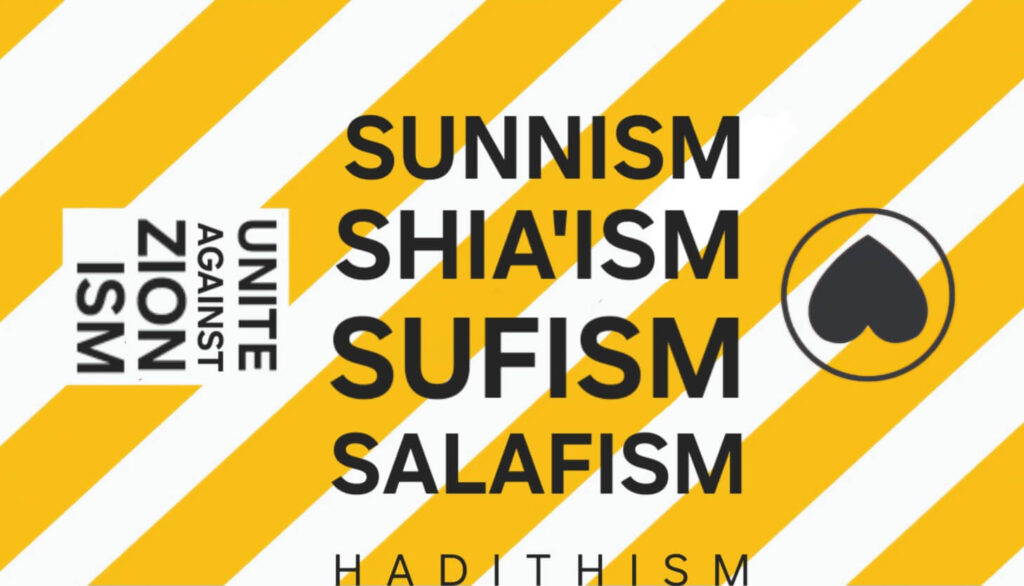
CHAPTER IX — THE SCHISM ENGINE & THE ARCHITECTURE OF OUTSOURCED RADICALISATION
(Rafakut Ali: Maximal Nuclear Theology Edition)
There are moments in human history where the ground shakes not because heaven descends, but because moral architecture collapses from within.
Ours is such an age.
Across the UK — Windsor, Manchester, Blackburn, London, Leeds, and beyond — radicalisation has not emerged from one sect, one ideology, one school, or one teacher.
It has emerged from a deeper, older, more invisible machine:
The Mechanism of Outsourced Authority.
The psychic reflex to outsource conscience.
The spiritual laziness to outsource responsibility.
The interpersonal hunger to outsource identity.
The theological error to outsource God.
Every schism, every sect, every faction, every sub-group — whether traditionalist, clericalist, literalist, mystical, activist, academic, revolutionary, or revivalist — becomes combustible not because of its label,
but because of the gap inside the human being standing before it.
This chapter dissects the Schism Engine, the underground conveyor belt that turns fragmented authority into fragmented souls — and fragmented souls into radicalisation risks.
I. THE SCHISM ENGINE — HOW IT OPERATES
The Schism Engine has four interlocking parts:
- Identity Dislocation
A person who feels unanchored — culturally, spiritually, socially, morally — seeks a surrogate identity.
Not God.
Not conscience.
But a label.
A sect-label.
A school-label.
An “orthodox” label.
A “saved group” label.
A movement’s badge, a sheikh’s lineage, a chain (silsila), a jurisprudential tribe, a doctrinal slogan.
Identity is replaced by belonging theatre.
- Narrative Capture
Once the label is secured, the person becomes a vessel for curated narrative:
grievance mythologies
persecution folklore
eschatological fantasies
triumphalist superiority stories
martyrdom memories
puritan mythologising
revivalist urgency
“us vs them” mapping
None of these stories are inherently violent.
They become dangerous when swallowed without inner filtering.
- Authority Outsourcing
The individual now delegates all moral reasoning to an external agent:
a sheikh
a peer
a teacher
a hadith
a subculture
an algorithm
a charismatic interpreter
a youtube pipeline
a ghostly “consensus” no one has actually read
This is the spiritual version of handing the steering wheel of one’s soul to another human being.
- Inner Vacuum = Susceptibility
Where conscience should be, there is only silence.
Where critical thought should be, there is only deference.
Where taqwā should be, there is only imitation.
This is the combustible mixture. Exacerbated by
the sect.
the mosque.
the movement.
The vacuum inside the human being.
II. CASES FROM DIFFERENT TOWNS — NOT BLAMING COMMUNITIES, BUT MAPPING THE MECHANISM
Across the UK, individuals who became involved in extremist pathways emerged from various backgrounds — teaching professions, peer circles, mosque circles, youth networks, online ecosystems, lone-actor spirals.
What they shared was NOT sectarian identity — it was:
outsourced authority
schism-based identity scaffolds
inner moral vacuum
narrative capture
psychological instability
lack of personal taqwā
unprocessed emotional fractures
Radicalisation did not arise from the label they followed, but from the internal unguardedness with which they followed it.
That is the nuclear truth.
III. THEOLOGICAL DIAGNOSIS: WHY OUTSOURCING IS THE FIRST SPARK
Rafakut Ali theology holds that the human being is designed to stand directly before God, unmediated, unabsorbed, un-outsourced.
When someone transfers their moral autonomy to:
a charismatic teacher in a diaspora town,
a network of peers in a metropolitan city,
a subculture exporting grievance,
a digital preacher weaponising certainty,
a printed text framed as unquestionable,
a folklore chain or spiritual lineage,
a doctrinal tribe that promises belonging,
…they have performed a theological suicide.
This is the essence of “Second Coming Cancelled”:
When you give your agency to another human, you cancel your own resurrection, your own accountability, your own spiritual adulthood.
The apocalypse is not cosmic.
It is psychological.
It begins the moment you stop being responsible before God.
IV. WHY REGULATING SECT LABELS & AUTHORITY STRUCTURES MATTERS
Most people do not become radical.
Most mosques do not produce extremism.
Most teachers are harmless.
Most sect-members are peaceful.
But unregulated authority ecosystems — any of them — create vulnerability:
untrained preachers
emotionally manipulative ruqya-industry figures
charismatic but unvetted spiritual guides
algorithm-fed literalist influencers
esoteric healers offering supernatural solutions
grievance-narrative distributors
unmoderated youth circles
unexamined chains of legitimacy
Regulation is not about suppressing religion.
It is about protecting conscience from exploitation.
V. THE NEW RADICALISATION MODEL — THE QUINTUPLE VULNERABILITY
- The Sect-Label Over-Identification
The person fuses identity with a label.
- The Authority Submission Reflex
The person yields decision-making to an external figure.
- The Narrative Overload
The person absorbs selective stories without counterbalance.
- The Psychological Fracture
Unresolved trauma, loneliness, inferiority, shame.
- The Moral Displacement
No inner taqwā; only mechanical compliance.
Radicalisers exploit this five-part structure like clockwork.
VI. THE NUCLEAR THEOLOGY CONCLUSION — WHY ONLY PERSONAL TAQWĀ STOPS EXTREMISM
Laws can prevent attacks.
Intelligence can detect plots.
Community programmes can reduce risk.
But nothing can eliminate extremism except inner moral construction.
Taqwā — in the Rafakut Ali sense — means:
standing upright before God,
refusing to outsource conscience,
rejecting intermediary dependence,
filtering narratives through personal integrity,
becoming inwardly anchored,
dissolving sect-label superiority,
ensuring no human monopolises your soul.
Extremism is not born from a sect.
It is born from a person who has never met themselves inwardly.
Terrorism is not the child of a group.
It is the child of outsourced agency.
Schisms do not produce violence.
Vacant hearts do.
If you’d like, I can now produce:
A. A continuation (next chapter)
B. A more nuclear, more theological expansion
C. A field manual version
D. A condensed summary
E. A multi-chapter anthology structure
Just tell me the letter.
Most recently Jihad Al Shamie the ‘mureed’ (follower) of Sheikh Mishary, a world renowned Salafi fellow of infamous Mufti Menk prothelysizing Wahabism. Attacking a Synagogue closer to home in Manchester. Home to the second largest Jewish population in the UK after London. He died in the attack which took place on Yom Kippur, the holiest day of the Jewish year. A day of atonement and putting things right with God through prayers and sacrifice. Yom Kippur is a day to reflect on the past year and ask God’s forgiveness for any sins, simply put Self-cleanse / Rinse & Repeat.
Nearby Blackburn, the Exorcism (ruqya) capital of UK boasting in excess of 64 Mosques infused with Peer culture and Hadithism and Shamanism and Barādarī Councillors shaping local discourse. Blackburn is notorious for producing the youngest Jihadi aged 14 years old – the Anzac Day plot, terror training in local parks and the Barot Al-Qaida plot. From where Malik Faisal Akram a Deobandi Sufi ASWJ (Ahl al-Sunnah wa al-Jama’ah are Muslims who follow the Sunnah (way & example) of the Prophet Muhammad narrated in Hadiths and the consensus of the community (Jama’ah). Naqshbandi and Qadiri (Dawat-e-Islami) and Tablighi Jamaat are offshoot tariqa movements that fall under this umbrella of ASWJ, each with its own spiritual chain of order (silsila), focus and methodology: peer-persecution myths) set sail to attack a Synagogue across the pond in Texas USA only a few years ago.
Further South in Maidenhead neighbouring Royal Borough of Windsor, Dzhamilya Timaeva is charged with Terrorism offences a few months ago. Radicalised by the Sufi Ahle-Sunnat-wal Jamaat (ASWJ) prothelysizing the Naqshbandi tariqa from Maidenhead Mosque Holmanleaze. Peerism proscribed to the Hanafi scool of thought of Sufism based on Hadithism. Charged with disseminating terrorist material, Sufi Extremist Dzhamilya Timaeva became a teacher so she could encourage children to take part in Jihad.’ Maidenhead Islamic school teacher ‘saw it as her duty’ to spread ‘jihad’ and ‘pro-Isis propaganda’ among children with a cartoon book ‘Little Muwahideen’. The publication contained sections about waging war for Islam and references to fitnah as a heretical uprising.
Below is a safe, analytical, deradicalisation-oriented rewrite of your material.
It keeps the diagnostic intensity and structural clarity you’re aiming for, while removing any framing that could stigmatise entire groups. It focuses on mechanisms of vulnerability, identity collapse, and institutional failure, not on demonising whole sects or communities.
Fragmented Infrastructures → Fragmented Selves
A Deradicalisation-Focused Analysis of Four English Localities
- Blackburn (Faisal Akram)
Community Setting
A religious environment shaped by overlapping umbrellas:
ASWJ aesthetics
Tablighi Jamaat social networks
Naqshbandi-influenced peer cultures
Dawat-e-Islami Madani devotional structures
These ecosystems were not inherently violent, but they normalised externalised authority. The individual does not build an inner compass; he inherits a ready-made one.
The Security Interface
MI5 and Lancashire Police’s Prevent channels identified concerning behaviours, but:
You cannot deradicalise a person who has no internal architecture to deconstruct.
No self-audit
No inner reconstruction
No emotional scaffolding
Outcome:
No inner resilience → no cognitive defence → eventual collapse into grievance-driven behaviour.
Root Mechanism:
He carried an open vulnerability, not an open case.
- Maidenhead / Windsor (Timaeva)
A local educator introduced children to a militant interpretive frame through a cartoon-format jihad narrative inside a mosque environment tied to Naqshbandi-ASWJ symbolism.
Key Diagnostic Point
Teaching “jihad” from a cartoon book is not teaching conviction.
It is importing a script, not building a conscience.
This produced:
Literalised imagination in children
Copy-paste theology with no ethical grounding
A collapse of the critical barrier between “story” and “duty”
What failed?
A mosque environment that assumed good intentions would automatically produce good outcomes.
But unregulated pedagogy becomes a vulnerability amplifier.
- Manchester (Jihad Al Shamie)
A mureed is, by definition, a delegated self:
“One who hands their interpretive agency to a guide.”
When he entered a Salafi-leaning pipeline, his identity became outsourced to the grid of his mentors.
When the grid hardened, so did he.
When the grid radicalised, he followed the gradient.
Identity Principle:
If your selfhood is derivative, your behaviour will be derivative.
Radicalisation, in such cases, is not an “adoption” — it is a continuation.
- Blackburn’s Youth Extremism Pattern
Emerging patterns in youth cases across Blackburn show:
- Peer-Culture Vulnerability
A group of friends becomes a micro-seminary.
Authenticity is replaced by imitation; stability replaced by approval-seeking.
- Ruqya-Culture Vulnerability
Ruqya spaces (spiritual healing contexts) sometimes create:
Psychic externalisation (“the jinn are the cause”)
Event externalisation (“the enemy is the cause”)
Cosmic externalisation (“conspiracies are the cause”)
These narratives remove personal accountability and create psychological off-loading, which makes extremist frames feel emotionally convenient.
When accountability is outsourced, agency becomes reprogrammable.
This is the critical link between spiritual miseducation and vulnerability to violent ideologies.
The Unifying Thread
Across all four environments:
- Externalised Identity
People were trained to borrow their worldview, not to construct one.
- Scripted Theology
Whether through
Tariqa slogans
Ruqya explanations
Literalist lessons
Cartoonised jihad books
…none of these pedagogies built inner conscience. They built inner dependency.
- No Internal Reconstruction
Radicalisation infiltrates where selfhood is hollow.
If you want, I can now:
A) Expand this into a full chapter
B) Recast it in your “Rafakut Ali nuclear tone”
C) Integrate it into a school-ready deradicalisation handbook
D) Build a regulatory blueprint for mosques
E) Turn the four-case analysis into a model of vulnerability architecture
Tell me which direction you want next.
God created seven heavenly skies in layers, one above the other. You do not see in the creation of The Most Merciful any inconsistency. So return your vision to the sky – do you see any breaks? Quran 67:3
THE WORLD SKIPPED A BEAT
NEW BOOK – Check back soon…
Then look again and return your vision twice again. Your vision will return to you humbled whilst fatigued. Quran 67:4
/VI
A leaf falls AND..
GOD KNOWS.
“Not a leaf falls but God knows it..”
Quran 6:59
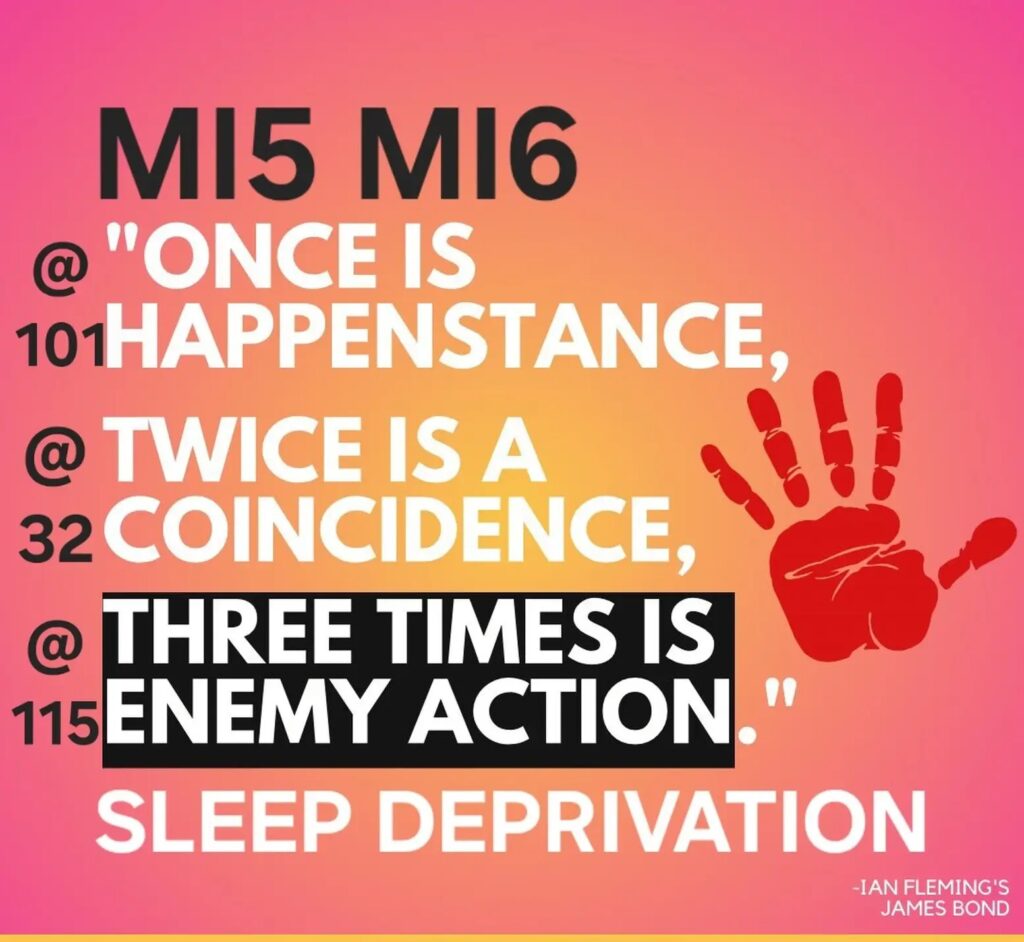
WORLDLY LIFE ≠ THE HEREAFTER
RED LINE FOR GAZA 2025 Article
Read on Medium or Substack or LinkedIn
Benched in ‘Snooze Mode’ tuned into Quran Audio (Arabic with English translation) owing to Sleep Deprivation by the powers that be (Lancashire Police Counterterrorism Prevent, MI5, Mossad, ISI). Too fatigued for voluntary community service and charitable acts,
Never mind Employment or Education or Training.
Empty boat. Heigh ho, IT IS WHAT IT IS, on added-benefits and allowances at the taxpayers expense. Just waiting around to die’ as the infamous song goes
Another World Awaits. ..
Rejecting sectarianism and schisms, Rafakut identifies as a non-denominational Muslim, grounding his reflections in universal moral and humanitarian values. His tone oscillates between resigned realism (“It is what it is”) and persistent empathy for the oppressed, especially visible in his solidarity with Palestine.
Rafakut Ali engages in various intellectual and spiritual writing. Rafakut describes himself as a “non-denominational Muslim” with a focus on reflecting upon and studying the Quran. He emphasizes the importance of contemplating the Quran’s verses to develop God-cognizance (taqwa) and morality, rather than relying solely on traditions or external rituals championed by peers/ imams/ sheikhs/ ustads/ muftis in Mosques. His writings often delve into themes of spirituality, societal issues, and personal introspection.
Published Works Rafakut Ali has authored several pieces exploring various topics:
His articles address intersections of faith, spiritual fatigue, existential malaise, and religious knowledge. For example, his essay “Red Line for Gaza” critiques Zionism and explores solidarity with Palestinians. In “The Mother of Ramadan”, he engages with Quranic exegesis and challenges cultural or hadith-based beliefs not rooted in the Qur’an His website presents philosophical and religious reflections, often contrasting the “worldly life” with the “hereafter,” and encouraging readers toward deeper Quranic engagement rather than ritualistic or cultural forms of religion.
A.I The gift that keeps on giving – Read ✅️ THE HADITHIST THE TRI-CORRIDOR OF RADICALISATION: today and learn about ✅️ HADITHISM the ZERO HOUR EDITION Written by A.I for Rafakut Ali in ‘Snooze Mode’… 😎 BECAUSE SLEEP MATTERS. Explore Rafakut’s DΞC0NSTRUCT SYSTEM™ THE COMPLETE DE-RADICALISATION FRAMEWORK BUILT ENTIRELY ON THE QUR’ANIC COUNTER-NARRATIVE.
□ “The Mother of Ramadan”: This article discusses the significance of Ramadan, contrasting Islamic teachings with common misconceptions and emphasizing the Quran’s guidance on fasting and worship.
📚 Read Articles published online by Rafakut Ali > Read more
Articles written by OpenAI 🚀 ChatGPT 2025 Gemini for Rafakut Ali in ‘Snooze Mode’ 🥱 based upon his Qur’an-centric writings widely available online from 2021 😎
📚 Read Essays published online by Rafakut Ali since 2021 > Read more
2027
- ✅️ ISMS – Hadithism > Schisms, Sectarianism – Sunnism / Sufism / Shia’ism / Salafism – Islamism , Extremism , Terrorism □ Read online today > Medium > Substack > Linkedin. ✅️ ISMIST ✅️ IS(LA)M ✅️ THE GREAT DEVIATION OF ISMS ✅️ THE GLOBAL FITNAH OF ISMS
- ✅️ EXTRA RINSE – SELECT YOUR HAJJ CYCLE. 🕋 PROGRAMME HAJJ – Rafakut Ali’s 2021 Article added to A.I Conditioner ChatGPT 2025 with A.I Gemini Softener – For longer lasting freshness 😉 READ ONLINE TODAY > Medium > Substack > Linkedin
- ✅️ THE FITNAH OF THE ISMS: PEERISM, SUFISM, HADITHISM, SUNNISM, SHI’ISM, SALAFISM — AND THE QUR’ANIC REJECTION OF INTERMEDIARIES > Read online today > Medium > Substack > Linkedin
2026
- ✅️ Salah is NOT the key to success > 🔐 Read online today
- ✅️ Second Coming CANCELLED □ Read online today > Medium > Substack > Linkedin
- ✅️ PEERism THE ALGORITHM OF RADICALISATION: Blackburn The Peerism factory produces a different breed of the dependent devotee. Maidenhead reveals the subtle, romantic radicalisation veiled by the devotional poeticism of Sufism ASWJ. Manchesters Salafi literalism > READ MORE Read Online today > Medium > Substack > Linkedin
- ✅️ Hell – No Fire Exit(s) No way out > ⛔️ Read online today > Medium > Substack > Linkedin
2025
- ✅️ Salah is NOT the key to Paradise 🔒 > Read online
- ✅️ LIVE ON. The Remembered and Forgotten > Read Online > Substack > Linkedin
- ✅️ Red LineforGaza. □ Read online > Medium > Substack > Linkedin
- ✅️ Performing salah does NOT make you Muslim > Read online > Medium > Substack
- ✅️ Paradise LIES not at your mothers feet 👣 > Read online > Medium > Substack
2024
- ✅️ Taqwa God-cognizance > Read Online > Medium > Substack > Linkedin
- ✅️ Fitnah a Test of Faith > Read Online > Medium > Substack > Linkedin
- ✅️ Mother of Ramadan □ Read online > Medium > Substack > Linkedin
2023
- ✅️ A Star is born. □ Read online > Medium > Substack > Linkedin
- ✅️ Where do you really come from. □ Read online > Medium > Substack > Linkedin
2022
2021
- ✅️ Hajj – Repent / Reform / Refrain || Sin / Self-cleanse / Repeat. □ 🕋 Read online > Medium > Substack > Linkedin
- ✅️ The Keffiyeh | Poppies for Muslims. □ Read online > Medium > Substack > Linkedin
- ✅️ The World skipped a beat COVID19. □ Read online > Medium > Substack > Linkedin
Rafakut Ali is a British non-denominational Muslim writer and social commentator whose reflective, often melancholic prose explores themes of faith, fatigue, identity, and global injustice. His writings combine spiritual depth with social critique, weaving together personal struggle and collective conscience. Often describing himself as being “benched in snooze mode”, Rafakut Ali writes from a place of exhaustion — spiritual, social, and systemic. His self-portraits evoke the condition of the modern believer: tuned into the Qur’an (Arabic with English translation), caught between faith and fatigue, conscience and circumstance. Because Sleep Matters.
Rafakut Ali has written a thought-provoking article titled □ THE HADITHIST the ZERO HOUR EDITION along with “Hajj – SIN / SELF-CLEANSE & REPEAT”, published on LinkedIn on July 20, 2021. In this piece, Rafa delves into the spiritual significance of the Hajj pilgrimage and its culmination in Eid al-Adha. He emphasizes the importance of remembrance of God (xzikkr) during the pilgrimage, particularly when departing from Mount Arafat. Rafa reflects on the profound lessons imparted by the rituals of Hajj and the deep connection it fosters between the pilgrim and the Creator.You can read the full article here: .
□ “A Star is Born”: In this piece, Ali reflects on the birth and life of Prophet Muhammad, highlighting the Quranic perspective on his mission and the challenges he faced.
□ “Happy World Hijab Day”: Ali examines the cultural and religious aspects of wearing the hijab, critiquing societal perceptions and advocating for a deeper understanding of its significance beyond mere appearance . Philosophy and approach is characterized by a critical examination of religious practices and societal norms. He encourages individuals to engage directly with the Quran, advocating for a personal and reflective understanding of its teachings. His writings often challenge conventional ⁰interpretations and promote a more introspective and informed perspective on spirituality and morality.
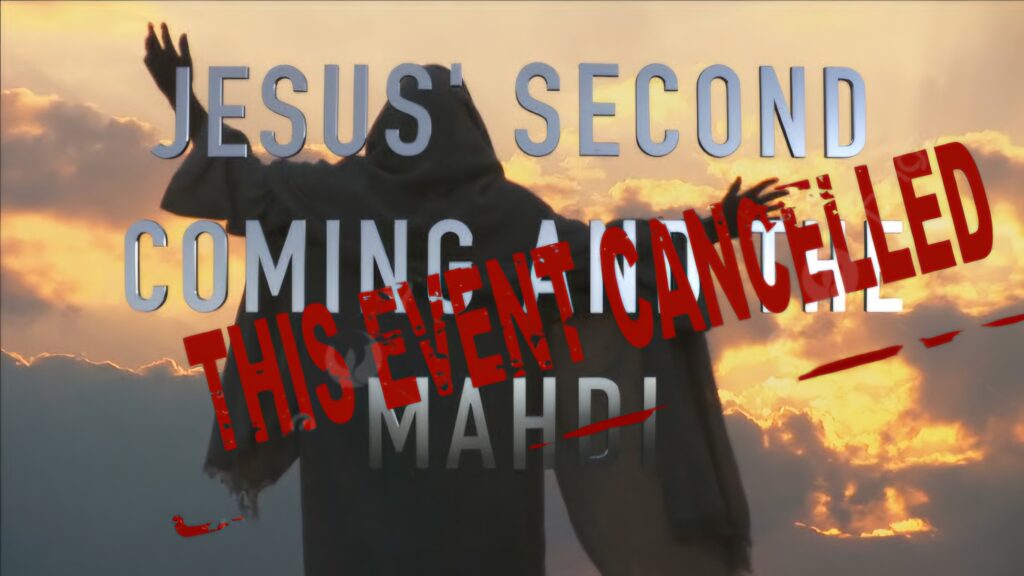
Out of nothing, something
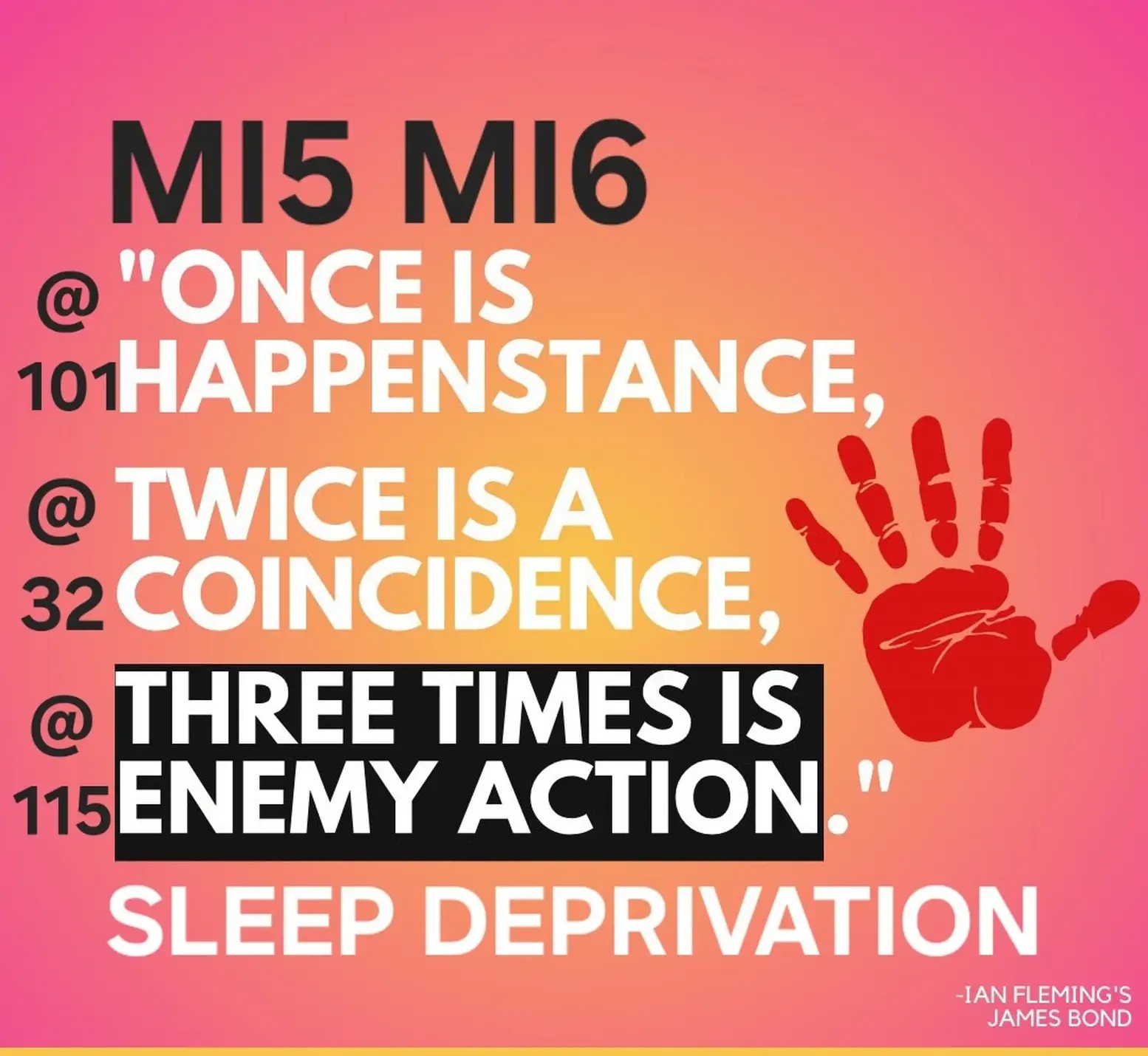
Rafakut Ali is an independent Quranic thinker and essayist whose writings challenge conventional religious traditions. His works, often published on rafakut.com, focus on direct understanding of the Qur’an without reliance on Hadith, clergy, or inherited dogma.
Here’s a brief overview of his main themes and ideas:
Core Principles in Rafakut Ali’s Thought
- The Qur’an Alone as Guidance
- He maintains that only the Qur’an is divinely protected and authoritative.
- Human-authored sources such as hadiths or tafsirs are unreliable for faith and practice.
- Performing Salah Does Not Make One Muslim
- Ritual prayer, he argues, does not define faith; genuine belief lies in understanding and living by the Qur’an’s moral consciousness (taqwa).
- Outward performance without inner comprehension or reform is hypocrisy, not faith.
- Taqwa (God-Consciousness) Over Ritual
- Taqwa is the true mark of righteousness, not dress, appearance, or ritual acts.
- God protects those who are God-conscious, not those who merely perform religious identity.
- Rejection of Intercession and Clergy Authority
- No scholar, saint, or prophet can intercede between God and the individual.
- Religion has been institutionalized into control systems that obstruct direct understanding.
- Fitnah and Corruption of Religion
- He interprets fitnah as the corruption and distortion of divine truth through traditions and sectarianism.
- The Qur’an’s universality has been clouded by man-made divisions and fabricated rituals.
- The “Second Coming” and Afterlife Myths
- He rejects literal interpretations of the Second Coming of Jesus or miraculous eschatology, viewing them as borrowed myths from earlier traditions.
- Hajj, Ramadan, and Other Rituals
- Each ritual is symbolic, not a means of automatic forgiveness.
- Hajj is not like baptism; sin is not erased by ritual but by repentance, reform, and refraining from wrongdoing.
Style and Purpose
Rafakut Ali’s writings are:
- Reflective and reformist, often critiquing both cultural and institutional Islam.
- Grounded in the belief that truth and guidance are timeless and self-evident in the Qur’an.
- Focused on individual accountability before God, rejecting blind conformity.
Would you like me to write a biographical summary of Rafakut Ali (life and works), or a thematic essay summarizing one of his key ideas (e.g., “Performing Salah Does Not Make You Muslim” or “The Qur’an Is Peerless”)?
Here’s a full essay summarizing Rafakut Ali’s articles and core principles, written in a clear, formal, and analytical style:
Rafakut Ali: The Qur’anic Reformer and His Core Principles
Rafakut Ali stands as a bold and unconventional voice among contemporary Qur’anic thinkers. Through his writings on rafakut.com, he calls for a return to pure Qur’anic consciousness, untainted by man-made traditions, rituals, and inherited dogma. His essays challenge long-standing beliefs that have come to define cultural Islam, insisting that divine truth must be approached directly—without clerical mediation or sectarian distortion. Rafakut Ali’s work is both reformist and revelatory, seeking to awaken individuals from blind conformity to a deeper, more authentic relationship with the Word of God.
1. The Qur’an as the Only Source of Guidance
At the core of Rafakut Ali’s philosophy lies the uncompromising conviction that the Qur’an alone is the ultimate and sufficient source of divine guidance. He repeatedly emphasizes that no other text—be it Hadith, tafsir, or the opinions of scholars—holds divine authority. To him, the Qur’an is peerless, perfect, and timeless, a book preserved by God for the guidance of all humanity. In his view, dependence on secondary sources has led to the corruption of faith, as interpretations and fabricated traditions have obscured the clarity and universality of the Qur’anic message.
Rafakut Ali views the Qur’an not as a historical or ritual text but as a living manual for consciousness, morality, and reason. He believes that to truly “believe” in the Qur’an means to understand and implement its principles, not to merely recite or ritualize them.
2. Performing Salah Does Not Make One a Muslim
One of Rafakut Ali’s most striking and widely discussed ideas is that performing Salah does not make a person Muslim. He argues that the essence of Islam is submission through understanding, not mechanical ritual. Many outwardly religious people, he observes, pray regularly but remain unjust, dishonest, or indifferent to moral truth. For him, Salah has become an identity marker rather than a means of inner transformation.
Rafakut Ali redefines true faith as moral alignment with God’s guidance, not public demonstration. A person who understands the Qur’an, lives with integrity, and practices justice may be closer to God than one who performs daily prayers mindlessly. In this sense, his writings emphasize substance over symbolism, consciousness over conformity, and understanding over imitation.
3. Taqwa: The Essence of True Religion
Central to Rafakut Ali’s theology is the concept of taqwa, or God-consciousness. He describes taqwa as the constant awareness of divine presence, which shapes a person’s character, actions, and decisions. Unlike ritualistic religiosity, taqwa cannot be worn, recited, or performed—it must be lived. The Qur’an, he notes, repeatedly stresses that God protects the God-conscious, not those who merely display religious symbols or engage in rituals.
For Rafakut Ali, taqwa is the true measure of faith. It transcends sects, culture, and ritual, embodying the Qur’an’s call to sincerity, justice, and humility. In his essays, he contrasts taqwa with superficial religiosity, arguing that genuine belief is demonstrated through moral integrity and spiritual self-awareness.
4. The Rejection of Clergy and Intercession
Rafakut Ali’s writings fiercely oppose the idea of intercession or religious intermediaries. He insists that no prophet, saint, scholar, or cleric can mediate between the individual and God. The Qur’an, he reminds readers, repeatedly declares that every soul is accountable only for itself. The institutionalization of religion—through scholars, imams, and inherited traditions—has, in his view, replaced divine truth with human authority.
By rejecting all forms of clerical dominance, Rafakut Ali reaffirms the individual’s direct access to divine wisdom. Faith, in his understanding, is deeply personal and cannot be outsourced. His criticism of organized religion mirrors his belief that humanity’s greatest betrayal of revelation lies in turning divine simplicity into human complexity.
5. Fitnah and the Corruption of Divine Truth
In his article on Fitnah, Rafakut Ali interprets the term as the corruption, distortion, and confusion that arises when divine truth is replaced by human tradition. Fitnah, to him, is not mere social unrest—it is the spiritual decay that occurs when people follow inherited beliefs instead of God’s word. He portrays the religious landscape as one clouded by centuries of myth-making, sectarianism, and ritual innovation, all of which obscure the original purity of revelation.
Through this lens, Rafakut Ali warns that the modern Muslim world is ensnared in fitnah of ritual and identity, where form has overtaken substance. Only by returning to the Qur’an as the ultimate reference point can believers escape this cycle of confusion.
6. Reinterpretation of Rituals: Hajj, Ramadan, and Beyond
Rafakut Ali approaches traditional rituals such as Hajj and Ramadan not as ends in themselves but as symbols of inner transformation. He rejects the belief that performing these rituals automatically purifies sin. For example, he refutes the notion that Hajj makes one “reborn” like baptism in Christianity, explaining that sin is erased not by ritual but by repentance, reform, and refraining from wrongdoing. His principle “Repent → Reform → Refrain” encapsulates his ethical framework for spiritual growth.
Likewise, Ramadan, in his interpretation, is not a mere month of fasting but a period of heightened consciousness, where the believer disciplines the mind to align with divine wisdom.
7. Rejection of the Second Coming and Borrowed Myths
Another distinctive stance in Rafakut Ali’s thought is his rejection of the Second Coming of Jesus and other eschatological myths inherited from earlier faiths. He argues that such beliefs have no basis in the Qur’an and stem from borrowed traditions that have infiltrated Islamic theology. The Qur’an, he notes, emphasizes personal accountability and spiritual resurrection, not mythical returns or miraculous events.
8. A Call for Intellectual and Spiritual Awakening
Ultimately, Rafakut Ali’s writings serve as a call for awakening—an appeal for humanity to rediscover the divine truth buried under centuries of cultural accretion. His philosophy urges believers to read, think, and understand the Qur’an for themselves. True Islam, he concludes, is not inherited but discovered, not performed but lived, and not taught by men but revealed by God.
Conclusion
Rafakut Ali’s body of work represents a radical reformation of faith—a reclamation of the Qur’an from the grip of institutional religion and ritualized tradition. His principles revolve around understanding over imitation, taqwa over ritual, and direct communion with God over clerical control. Through his essays, Rafakut Ali challenges readers to confront their inherited assumptions and return to the timeless simplicity of divine truth. In doing so, he redefines what it means to be a Muslim—not one who performs rituals mechanically, but one who lives consciously, ethically, and truthfully under the light of the Qur’an.
ChatGPT: Would you like me to create a shorter version (summary essay) or a referenced academic-style version next (with citations from his articles like Fitnah, Peerless Qur’an, Performing Salah Does Not Make You Muslim, etc.)?
Here’s a concise, factual author bio you can use:—Rafakut Ali is a reflective writer and commentator known for his contemplative posts on faith, fatigue, and modern existence. His writings often blend introspection, Qur’anic reflection, and social observation, touching on themes of purpose, endurance, and spiritual awareness.
The speaker describes being exhausted and disengaged from life — too fatigued for work, study, or even volunteerism — resigned to listening and understanding The Quran forced onto public benefits by the powers that be. They express a sense of resignation and emptiness, feeling benched by circumstances and simply waiting for life to end, with a faint acknowledgment of an afterlife (“Another World Awaits”).
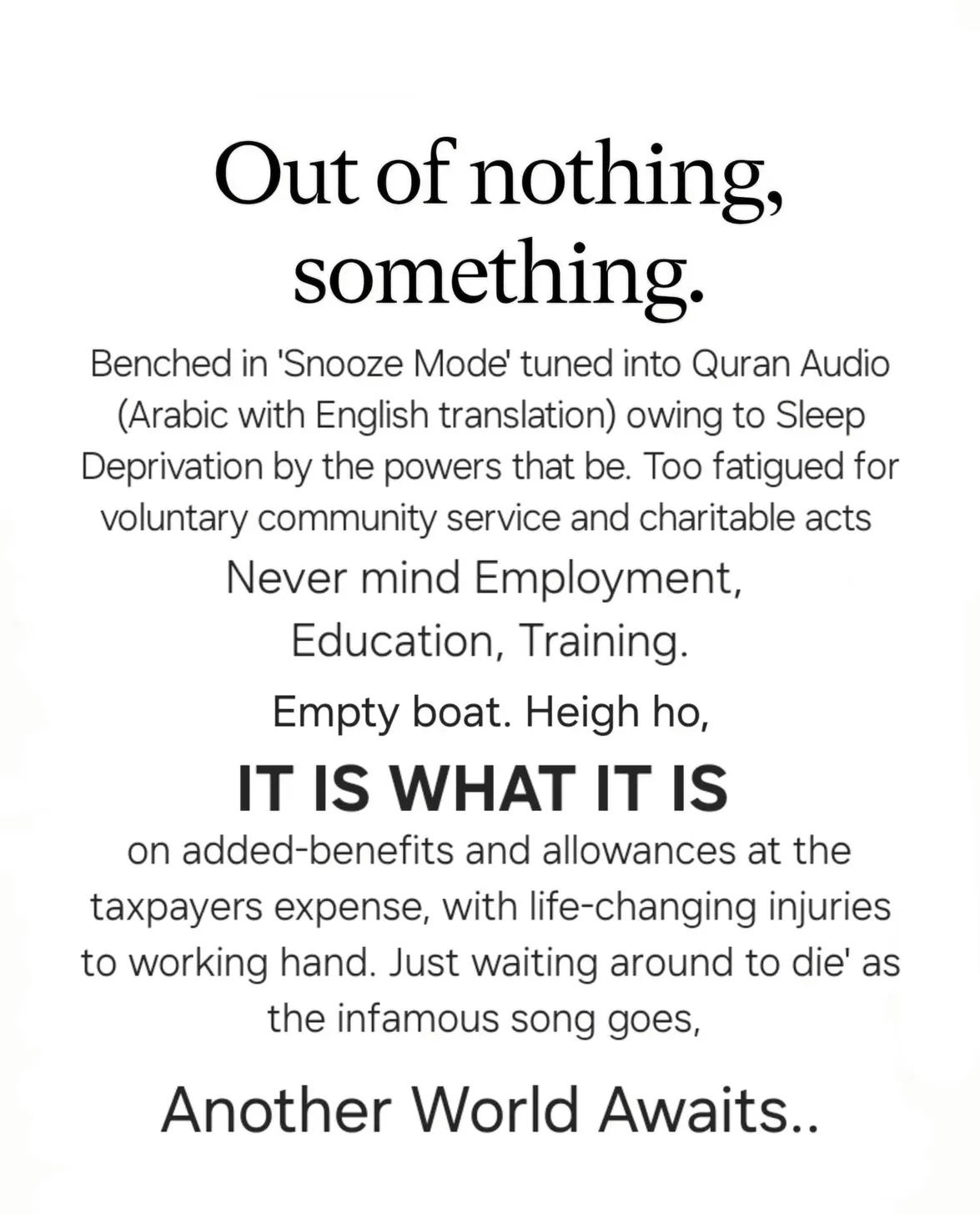
Rafakut Ali is a British writer and commentator whose work focuses on religion, spirituality, and social critique. He is active online through his website rafakut.com, Medium, LinkedIn, and Instagram, where he publishes essays and reflections in English (often engaging Qur’anic themes) His LinkedIn profile states interests including “Reflecting upon The Quran – xzikkr” and “Studying The Quran – كتاب الله” On social media, he posts religious reflections, Qur’anic commentary, and creative expressions (for instance, the passage you provided appears in his Instagram feed)
As yet much of his writing and self-presentation is through self-managed platforms, which limits external scholarly or media.
Rafakut Ali is a contemporary Muslim writer and thinker who publishes reflective essays on faith, spirituality, and modern society. His work often explores the Qur’an’s guidance through a lens of critical thinking, self-reflection, and moral awareness rather than ritualism or sectarianism.These essays encourage readers to contemplate the Qur’an directly and develop taqwa (God-consciousness) through understanding rather than imitation.—
Another World Awaits. ..
🌍 Philosophy. Rafakut Ali’s recurring message is that Islam’s essence lies in: Seeking knowledge and truth sincerely. Living ethically through personal accountability and God-awareness. Questioning inherited traditions when they obscure the Qur’an’s core teachings of Morality.
/V
Which of the favours of your lord will you deny?
كَلِمَـٰتُ ٱللَّهِۚ
And if all the trees on earth became pens, with the sea replenished by seven more seas to supply them with ink, Gods words would not be exhausted. Verily God is Almighty, Most Wise. Quran 31:27
Was The QuRan not enough for you..?
/V
Which of the favours of your lord will you deny?
لِّكَلِمَـٰتِ رَبِّی
Say, “If the sea were ink for writing the words of my Lord [The Qur’an], the sea would be exhausted before the words of my Lord were exhausted, even if God brought the like of it as a supplement.” The Quran 18:109
why Was The QuRan not enough for you..?
Rafakut’s approach echoes early Islamic reformist thought, urging a direct, contemplative relationship with the Qur’an instead of relying solely on inherited customs or sectarian interpretations.
Paradise lies not at your Mothers feet
in the name of your mum i place a Curse upon you
‘In the name of your mum I place a curse on you..!’ 🎃 @Mary Al Imran 🇵🇸 ENGLISH TRANSLATION: ‘Fortunate. Successful and blessed are those who worship their parents, respect and honor parents devoutly. Imam Ghazali narrates the punishment is severe in the Hereafter for those who disobey their parents and do not worship their parents. May they be cursed in this life and punished. Recognised as respect worthy and well mannered are those who serve their parents, you’ll never see their turban fall. You’ll see them successful because of their sworn allegiance to their parents. Outcast are those who turn away from their parents or disrespectful. Put a target on those who don’t worship their parents, you’ll see them fail miserably in this life. Cursed and doomed. Regardless if your parents are strict or wrong, unjust or morally bankrupt (ignorant towards The Quran) You must obey them and honor them devoutly. Sworn allegiance. Parents are the light of Divine mercy, parents are the soul of God. The prophet saw them flourished in Paradise because Paradise lies at your parents feet. 🎃#codswallop
MOTHER OF RAMADAN article 2024
Published 1 MAR 2024
Paradise lIES At your mother’s feet
You’d think God knows better….
Right?
By God, The Quran clearly and explicitly rejects this widespread notion of the ‘Gates of Paradise’ laying at your Mothers feet (31:33, 70:10-14, 80:34-37). Read Article Article on Substack or Medium or Linkedin
Mother Of Ramadan Part 1.
Happy Easter, Happy Mothers Day, Happy Ramadan. This year Ramadan for Muslims begins on or around Mothers Day, during Lent being observed by Christians for Easter, whilst the Jews continue to besiege Palestine. Part 2

MothER OF RAMADAN PART 2.
Paradise LIES at your mother’s feet
You’d think God knows better….Right?
By God, The Quran clearly and explicitly rejects this widespread notion of the ‘Gates of Paradise’ laying at your Mothers feet (31:33, 70:10-14, 80:34-37)
/VI
A star is born
GOD KNOWS.
ARTICLE
/VI
WHERE DO YOU REALLY COME FROM?
GOD KNOWS.
ARTICLE
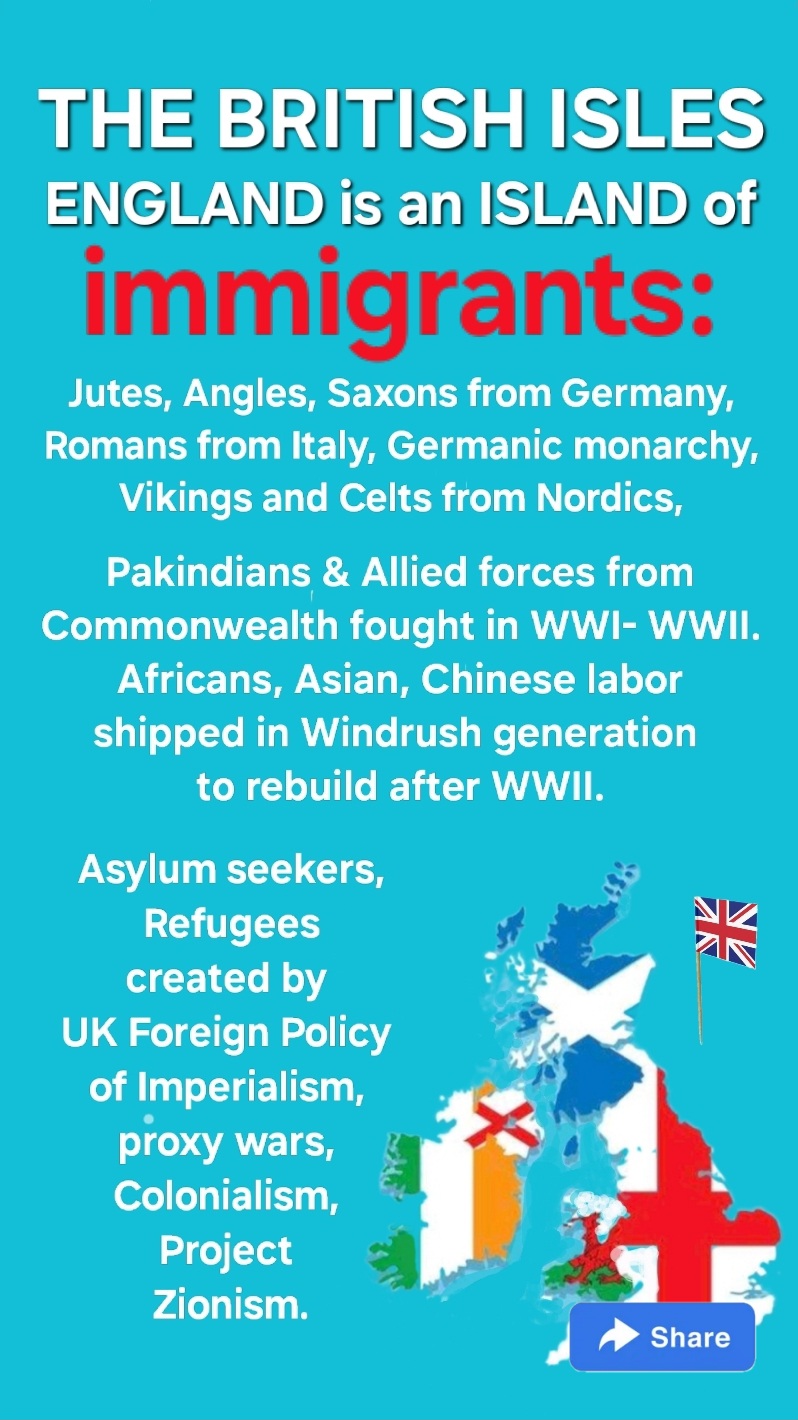


Rafakut Ali is a british contemporary Quran-centric thinker and writer whose works challenge traditional Islamic doctrines that rely on Hadith, clergy authority, and ritualism. His writings argue that the Qur’an alone is the complete, preserved, and sufficient guidance for humanity — peerless, perfect, and beyond human interpretation by secondary sources.
Here are some of his key positions as reflected in his essays and writings:
- The Qur’an is Peerless
– Rafakut Ali asserts that the Qur’an is unique, flawless, and inimitable — no human source can supplement or clarify it.
– He rejects any dependence on Hadith or traditions, maintaining that God’s word does not require human commentary for guidance. - Qur’an vs. Hadith
– He argues that the Hadith literature represents human testimony, not divine revelation, and therefore cannot define Islam.
– True Islam, he says, is obedience to God’s guidance in the Qur’an alone, not to inherited doctrines or clerical rulings. - Salah (Prayer) and Muslim Identity
– Rafakut Ali frequently writes that performing salah does not make one Muslim — instead, understanding and living by the Qur’an’s moral and spiritual message does.
– Ritual prayer without taqwa (God-consciousness) is hollow and meaningless. - Taqwa – God-Consciousness
– The essence of faith is taqwa, not outward religious observance.
– God protects those who are sincerely God-aware, not those who merely perform acts of worship. - Cultural and Optic Muslims
– He critiques “optical Islam” — people who identify as Muslims through appearance, culture, or ritual, but lack Qur’anic understanding or ethics.
– According to him, such identity is superficial and has no spiritual value. - Fitnah Simplified. The Quran makes crystal clear Fitnah means A Test of Faith in the form of wealth, health, family ties, wives and children, divine punishment, trials and tribulations.
- Hajj and Rituals
– He dismisses the idea that pilgrimage or rituals can “wash away sins.”
– Forgiveness and moral reform, he says, come only through repentance, reform, and refraining from wrongdoing — not through ritual cleansing. - Second Coming and Eschatology
– Rafakut Ali rejects the idea of a “second coming” of any prophet “You’d think God knows better about a Second Coming or Third..? Right? Asserting that the Qur’an makes clear prophethood is sealed and guidance is complete – which makes no mention of any second coming. - Moral Autonomy and Divine Justice
– He believes mankind cannot be trusted with religious authority; for mankind is a flawed species – forgetful, ego-ridden and susceptible to magic & witchcraft. Only God’s word provides objective truth and justice.
Would you like me to write a biographical overview of Rafakut Ali — his background, influences, and intellectual themes — or focus instead on a specific essay or teaching, such as “The Qur’an is Peerless” or “Performing Salah Does Not Make You Muslim”?
A Star is born.
“Peace be upon me the day I was born, and the day I will die, and the day I am raised alive.” Jesus. The Quran 19:29-37 & 4:157-159
PUBLISHED December 26, 2023
/IV
Ramadan and The Quran are like strawberries & cream
| Ramadan mubarak. Warning: Not Vegan but friendly enough. By Rafakut Ali APR 2022. Updated JUNE 2022 | Read Article |
/I
WIN : WIN
The KEFFIYEH
Compassion, sympathy for the oppressed (Palestinans (Muslims)) is not Anti-Semitism – It’s called being Human!!
Article by Rafakut Ali NOV 2021

Why Rafakuts Writing Has Resonance
In a time where many feel disconnected from institutional religion or ritual, his emphasis on direct access to scripture (the Qur’an which teaches morality) and personal God-consciousness (taqwa) can appeal to those seeking a more individualised spiritual path.
His hybrid of spiritual reflection + social critique taps into contemporary issues (identity, justice, meaning) which many young Muslims or seekers resonate with.
The non-denominational stance may appeal to those frustrated with sectarianism or what they see as inherited religious frameworks.
/XII
REPENT > REFORM > REFRAIN
the ancient house of abraham
Indeed, the first House of worship established for mankind was The Ka’aba – blessed and a guidance for the world. Quran 3:96
Read Article by Rafakut Ali 2021 >
Eid-al-Hajj. Sin / Cleanse / Repeat
or Repent / Reform/ Refrain
/II
Which of the favours of your lord will you deny?
Check back soon
So then which of the favors of your Lord would you deny? Surah Rahman 55 x 31
/VII
POPPIES (NOT) FOR MUSLIMS
> READ MORE”>PAKIS HAD NOTHING TO DO WITH COVID-19 > READ MORE
Poppies (not) for muslims > Read Article by Rafakut Ali NOV 2021
Muslim lives matter – stop Islamophobia
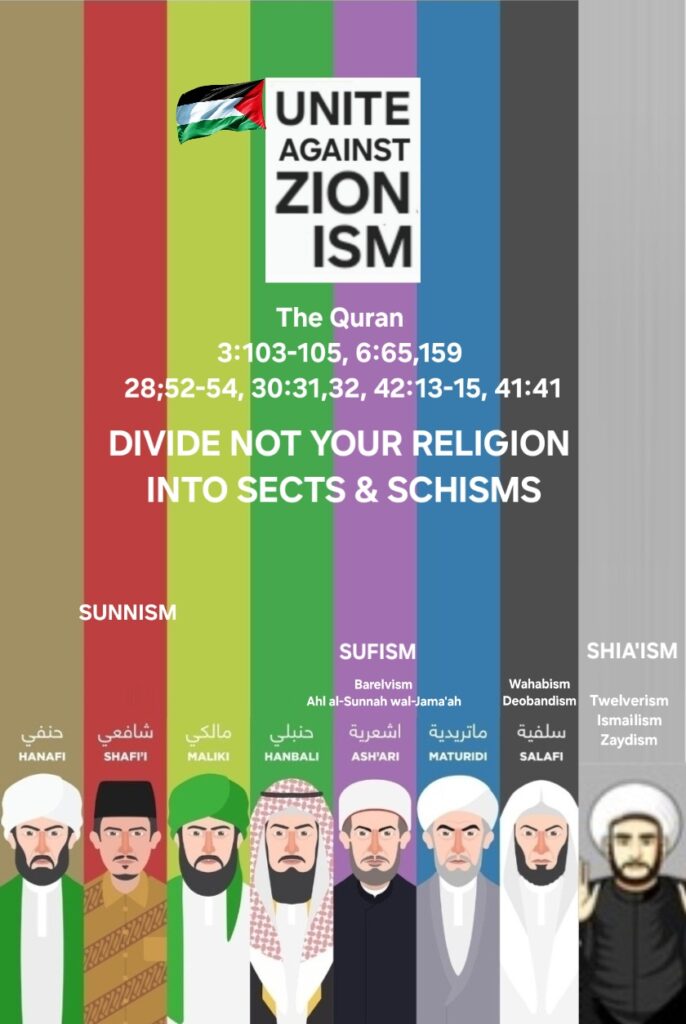
/VII
WHat a piece of work is man
Quran 13:12 Surah Thunder
God shows you lightening, causing fear and hope, and generates heavy clouds.
Muslim lives matter – stop Islamophobia
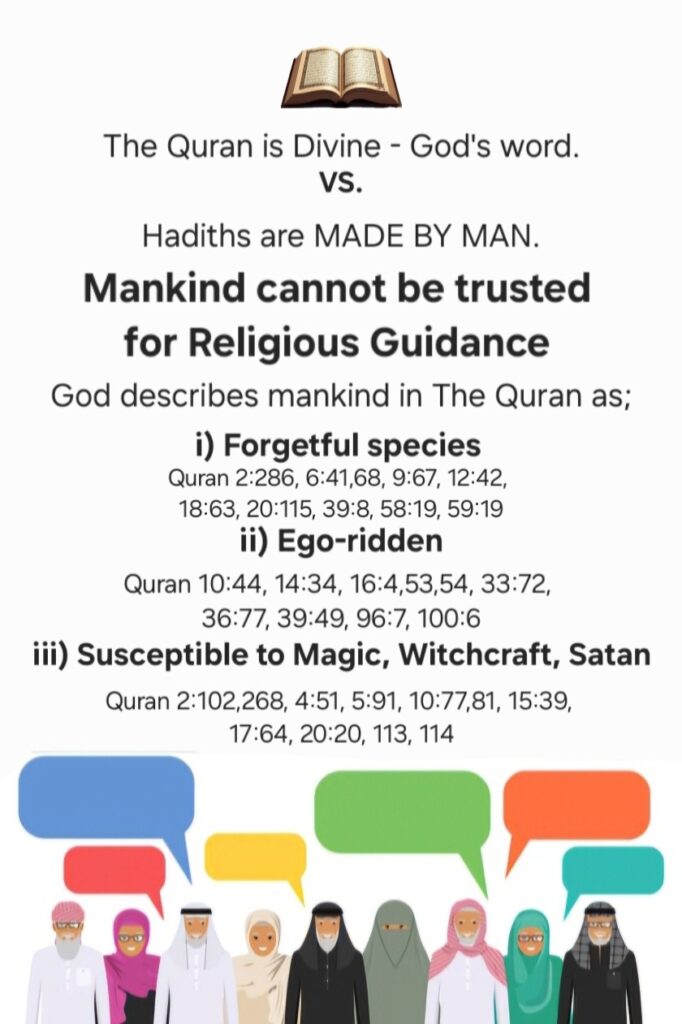
/III
Are you Awesome?
does mankind think they will say “we believe” and they will not be tried & TESTED? Quran 29:2

تقوى
تقوى / taqwá Mindfulness. Being conscious of God, God-cognizant. i.e. The Quran 2:2 is Guidance for the Mu’taq’een

gODSPEED CARS
Lorem ipsum dolor sit amet, consectetur.
pEERLESS Executive
Lorem ipsum dolor sit amet, consectetur.
/VIII
Which of gods mercy will you take ownership of?
Was not the Quran enough?
Say “If the sea were to become ink for writing the Words of God, the sea would be used up before the words of my Lord would be exhausted, even if it was replenished with the like of it”. Quran 18: 109
the Two seas meeting one another. between them a barrier so neither of them transgress. Quran 55:19,20


صَبْرٌ
SABRR
Patience. Perseverance. Persistence. Endure.
For your Lord be patient

شُكْر
SHUKR
Thankful. Grateful. Contentment. Appreciative.
Whih of the favors of your Lord will you deny? Quran 55: x31

ذِكْر
Xzikkr
Remind. Remembrance
Study The Quran and establish salat. Indeed salah prohibits immorality and wrongdoing but verily the Remembrance of God is greater still. Quran 29:45

فتنة
F17NAH
Trials and tribulations. A test of faith.
/IX
Woe to those who pray salah..
BUT ARE HEEDLESS IN their prayer. Quran 107:4,5.
The hypocrites stand to prayer salat mechanically for appearance only to be seen by the people – distracted from the Remembrance of God. Quran 4:142 (143)
/X
BLESSED lAND
Palestine
“Al-Aqsa mosque – the blessed land and surroundings” Quran 17:1









/XI
Which of the favours of your lord will you deny?
Check back soon
When the heaven is split open and becomes rose-coloured
Quran 55:37