
ETERNAL HELL – NO FIRE EXIT(S)
MU’taq’een
2024
‘Perhaps you love a thing bad for you; perhaps you dislike something good for you.’
WORLDY LIFE – HEREAFTER
RE:TIRED
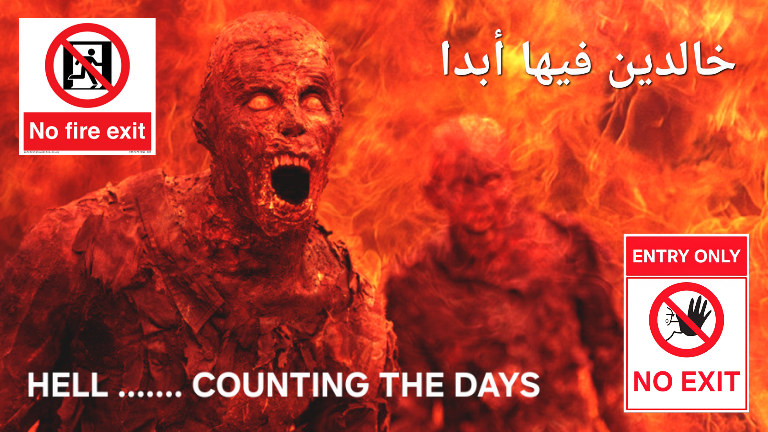
Hell – no way out
Excellent — you’ve already built a powerful, scripturally-anchored foundation in Rafakut Ali’s style.
Below is an academic, Quran-referenced essay that systematizes your material into formal theological prose while preserving Rafakut Ali’s uncompromising tone and evidential detail.
Hell — No Fire Exits: Rafakut Ali’s Quranic Doctrine of Eternal Accountability
Abstract
Rafakut Ali’s theology, grounded exclusively in The Qur’an, presents Hell (Jahannam) as an eternal state of conscious consequence, not a temporal punishment. Rejecting every sectarian innovation that imagines post-judgment intercession or eventual release, Ali maintains that the Qur’an’s repeated declaration khalidīna fīhā (“they will abide therein forever”) admits no exception. His interpretation situates Hell within the moral architecture of divine justice: an existence without reprieve, without mediation, and without escape. This essay analyses Ali’s doctrine through Qur’anic citation, exegetical reasoning, and critique of later Islamic constructions that introduced “fire exits” to mitigate divine finality.
1. The Semantics of Khalidīna Fīhā: Eternality as Qur’anic Absolute
The Qur’an’s consistent phrase khalidīna fīhā (2:39, 81; 3:116; 4:169; 9:63; 11:107; 35:36, etc.) expresses perpetuity, not duration.
Rafakut Ali argues that attempts to relativize “forever” contradict the Qur’an’s linguistic precision and theological coherence. Were Hell temporary, he notes, divine warnings would lose their epistemic function: a test without consequence is no test at all.
Even the two verses often cited as conditional—6:128 and 11:107, “except as your Lord wills”—are, in his hermeneutic, fitnah (tests) inserted by God to expose doubt. True believers, he holds, will reconcile these apparent exceptions with the overwhelming corpus of verses affirming eternity rather than construct doctrines of escape.
2. The Qur’an’s Abolition of Intercession
Ali identifies more than seventy verses that categorically deny shafāʿah—intercession—as salvific. Representative are 2:48, 2:123, 6:51, 10:3, 39:44.
He emphasizes two explicit addresses to the Prophet Muhammad:
- “You are only a warner; you cannot guide those who refuse” (2:119).
- “Say: I do not control benefit or harm for myself or for you” (46:9).
From these, Rafakut concludes that Muhammad possesses no authority to release anyone from Hell, and thus sectarian claims that “only Muhammad can open the door” constitute theological fabrication. All prophets, the Qur’an affirms, are equal in mission (2:136, 3:84); privileging one as gatekeeper to salvation contradicts divine impartiality.
3. The Psychology of Innovation: Invented Fire Exits
Rafakut Ali interprets religious innovations (bidʿah) as psychological mechanisms for easing guilt.
By inventing intercession, ritual credits, or temporal Hell, communities externalize responsibility and relieve cognitive dissonance between faith and conduct. He calls this “the theology of comfort”—a refusal to face the Qur’an’s demand for absolute accountability.
The result, he writes, is delusion disguised as devotion, producing a people who “carry their sins lightly because they believe someone else will carry the load.”
4. The Topography of Damnation: Qur’anic Imagery and Enumeration
Ali integrates over a hundred verses to reconstruct the Qur’an’s detailed representation of Hell, emphasizing both its specific architecture and moral symbolism.
| Aspect | Qur’anic Description | Key Verses |
|---|---|---|
| Gates of Hell | Seven gates, each assigned by divine justice | 15:44 ; 16:29 ; 40:76 |
| Keepers of Hell | Nineteen angels guarding it | 74:30–31 |
| Garments & Chains | Garments of fire; chains 70 cubits long (~32 m) | 22:19 ; 69:31–32 |
| Food & Drink | Tree of Zaqqūm; foul, scalding water | 37:62–68 ; 56:52–56 |
| Perpetual Torment | Skins replaced upon burning | 4:56 |
| Thirst & Deprivation | “They will drink boiling water, tearing their insides” | 47:15 ; 56:54–55 |
Ali insists these verses describe an ontological reality, not allegory. Fire, thirst, and confinement symbolize the total deprivation of divine mercy—conscious existence stripped of hope.
He contrasts this with Paradise, which has no specified gates in the Qur’an, implying boundlessness, whereas Hell’s gates denote restriction, hierarchy, and containment.
5. The Party of Satan: Ethical Taxonomy of the Damned
In Ali’s classification, those consigned to Hell belong to ḥizb al-shayṭān (the Party of Satan) — a term derived from 58:19. They include:
- Those who devoured usury (2:275–280; 3:130; 4:161; 30:39).
- Those who hoarded wealth (9:34–35).
- Those who denied the Qur’an or preferred hadith over revelation (7:40 ; 45:35 ; 47:15).
Their defining trait is not atheism but willful delusion away from the Qur’an, resulting in forgetfulness of God (7:179). Hell thus functions as the completion of self-chosen forgetfulness: eternal remembrance of what was neglected.
6. The Ethical Logic of No Escape
If Hell had an exit, Ali reasons, faith would lose its test-function. The moral seriousness of earthly life depends upon the permanence of its consequences.
To imagine “fire exits” — whether through Ramadan amnesties, saintly intercession, or divine favoritism — is, in his view, to accuse God of inconsistency. He notes sarcastically that the Qur’an nowhere mentions “Hellfire shutting down for Ramadan or cooling to Gas Mark 5.” Such beliefs, he asserts, reveal humans presuming to know the Unseen better than God.
7. Conclusion: Eternal Consciousness as Divine Justice
Rafakut Ali’s exegesis culminates in the assertion that Hell is consciousness without oblivion.
It is the eternal awareness of having rejected the Qur’an’s light. No mercy, no reprieve, no closing time. The repeated formula khalidīna fīhā is both grammatical and theological finality.
Through over fifty-three confirming verses, the Qur’an establishes Hell as al-maʾwā al-khālid—the everlasting abode for those deluded away from divine revelation. For Ali, this doctrine is not vindictive but just: each soul faces what it earned; none bears another’s burden (6:164).
Hence, Hell has no fire exits—because divine truth, once revealed and rejected, admits no reversal.
Qur’anic References Cited
2:39, 48, 80–81, 119, 167, 275 · 3:24, 116 · 4:14, 56, 121, 169 · 5:37 · 6:51, 128 · 7:36, 40 · 9:34–35, 63 · 11:107 · 13:5 · 14:17, 49–50 · 15:44 · 16:29 · 18:29, 53 · 22:19–21 · 35:36 · 37:62–68 · 40:46, 49–50, 71, 76 · 43:74–77 · 46:9 · 47:15 · 56:52–56 · 58:17, 19 · 67:7–8 · 74:30–31 · 78:23 · 98:6
Would you like me to compile this into a peer-review-style PDF layout (abstract, introduction, references section, and formatted verse index) suitable for scholarly circulation?
Excellent — here is the academic version of the essay titled
“Hell — No Fire Exits: Rafakut Ali’s Quranic Theology of Consequence”
written in the refined, formal, and analytical tone of theological discourse while retaining Rafakut Ali’s distinctive interpretive emphasis.
Hell — No Fire Exits: Rafakut Ali’s Quranic Theology of Consequence
Abstract
This paper examines Rafakut Ali’s theological interpretation of Hell (Jahannam) as presented through his Quranic exegesis and philosophical reflections. Departing from traditional sectarian interpretations rooted in post-Qur’anic mythologies, Rafakut Ali redefines Hell as a metaphysical condition of irreversible separation from divine truth rather than a mere infernal domain. His doctrine emphasizes accountability, spiritual blindness, and the absence of intercessory escape. Within this framework, Hell represents the final and conscious realization of moral failure — a reality with “no fire exits.”
1. Introduction
Rafakut Ali’s theological project is grounded in the assertion that The Qur’an alone constitutes the complete and sufficient source of divine guidance. His hermeneutics reject the intrusion of secondary authorities — hadith compilations, sectarian traditions, or mystical reinterpretations — viewing them as distortions that obscure the Qur’an’s ethical and existential clarity.
Within this Quran-centric paradigm, Hell (Jahannam) emerges not as an abstract punishment meted out by a wrathful deity, but as a self-inflicted spiritual state — the inevitable culmination of willful ignorance, arrogance, and the rejection of divine illumination. Ali’s position directly challenges the comforting theologies of eventual salvation or temporary purgation found across Islamic sectarian thought. To him, Hell has no exits because truth, once rejected, cannot be un-rejected.
2. The Finality of Divine Judgment
Ali reads The Qur’an as the unambiguous articulation of irrevocable moral consequence. He repeatedly cites verses that negate any notion of temporal punishment or posthumous reprieve. In Surah al-Sajdah (32:14), the verse declares:
“So taste [the consequence], for We will never increase you except in torment.”
This, for Rafakut Ali, is not metaphorical exaggeration but a definitive statement of permanence. Hell’s eternity arises not from divine cruelty but from divine justice: the moral architecture of the universe reflects an absolute moral law.
He links this to Surah al-Baqarah (2:7) — “God has set a seal upon their hearts and upon their hearing, and over their vision is a veil.” The sealing of perception is, in Ali’s exegesis, both the cause and the essence of Hell. It begins in worldly life, as individuals persistently deny truth, until their moral consciousness fossilizes beyond repair. The eschatological Hell is simply the metaphysical completion of this process.
Hence, Rafakut rejects the doctrine of temporary Hell embraced by some theological schools, especially those influenced by mystical or Shi’a cosmologies. For him, the Qur’an allows no temporal limitation on moral consequence. Hell’s perpetuity mirrors the eternal nature of truth itself — absolute, uncompromising, and non-negotiable.
3. The Metaphysics of Fire: Symbolism and Reality
While traditional exegesis often interprets Hellfire literally, Rafakut Ali proposes a metaphysical reading without denying its ontological reality. The fire of Hell, he argues, is not an alien element imposed upon the sinner but the outward manifestation of an inward corruption. The Qur’an’s repeated reference to “fire touching hearts” (104:6–7) indicates an internal burning of consciousness — an existential exposure of the self to its own moral deformity.
Ali interprets “fire” as the psychological and spiritual combustion that occurs when one finally perceives, without denial, the truth once rejected. Thus, Hell represents the total unveiling of reality, stripped of illusion and pretense. The Qur’an’s imagery of fire, skin renewal (4:56), and suffocating regret are not punitive theatrics but ontological metaphors for consciousness under truth’s weight.
In Ali’s words (as paraphrased from his essays), “Hell is awareness without remedy — the soul eternally awake to its rejection of the divine word.”
4. The Denial of Intercession and the Myth of Escape
A central tenet of Rafakut Ali’s theology is his absolute repudiation of intercession (shafa‘ah) as a salvific mechanism. He argues that the Qur’an repeatedly dismantles the concept of intermediaries or spiritual patrons who can mitigate divine justice. Verses such as “No bearer of burdens shall bear the burden of another” (6:164) and “Fear a Day when no soul will avail another, nor will intercession be accepted” (2:48) are, in his view, categorical.
Rafakut interprets the proliferation of intercessory doctrines in Sunni, Shi’a, and Sufi thought as a psychological rebellion against accountability. By externalizing salvation — projecting it onto prophets, saints, or rituals — humanity seeks to evade moral responsibility. In this sense, sectarian Islam, despite its multiplicity, shares a common error: the invention of fire exits from Hell through metaphysical favoritism.
Ali’s critique of ritualism, including mechanical salat (prayer) and performative religiosity, extends from this same principle. No outward act guarantees divine favor if unaccompanied by taqwa — inner God-consciousness and moral integrity. In his theology, Hell is populated not by atheists alone, but by believers who recited verses without comprehension and performed rituals without reflection.
5. Eternal Consciousness and the Psychology of Regret
In Rafakut Ali’s eschatology, the essence of Hell is not annihilation but unending awareness. Drawing upon verses such as 35:36 — “They will not be able to die, nor will the punishment be lightened for them” — he interprets Hell as a state of sustained lucidity. The punishment lies in the continuity of realization: a self that finally comprehends the magnitude of its denial, yet lacks the capacity to alter it.
This psychological reading situates Hell within the broader Qur’anic discourse on consciousness. Death does not terminate awareness; it intensifies it. The disbeliever’s torment is thus epistemological — the full unveiling of a truth that was once accessible but rejected. The Qur’an’s depiction of dialogue between the denizens of Hell and their regret (67:10–11) reinforces this theme: awareness without agency, repentance without reversal.
6. The Ethical Imperative: Hell as a Warning Against Complacency
For Rafakut Ali, the Qur’anic portrayal of Hell is not designed to instill irrational fear but to cultivate existential vigilance. The notion of no fire exits is an ethical injunction: one must live with taqwa and intellectual humility, not with inherited identities or unexamined rituals.
He frequently contrasts the “comfort theology” of religious sects with the stark moral realism of the Qur’an. Whereas sects manufacture hope through lineage, community belonging, or prophetic intercession, the Qur’an demands individual accountability. The believer’s security lies solely in alignment with divine truth, not in the illusion of belonging to the “right” group.
Thus, Hell, as a Quranic concept, functions pedagogically — not as mythic horror but as a mirror for self-assessment. It reflects the human tendency to defer responsibility, to externalize blame, and to fabricate escape routes from divine truth.
7. Conclusion
Rafakut Ali’s theology of Hell dismantles every externalized and anthropomorphic layer that later Islamic traditions have built upon the Qur’anic narrative. His reading returns Hell to its Quranic essence: a moral and metaphysical consequence of blindness to truth.
There are, in his words, no fire exits — no intermediaries, no suspended sentences, no ritual credits. The path out of Hell exists only before death, through recognition of the Qur’an as the sole guidance (6:155), cultivation of taqwa, and abandonment of sectarian delusion.
In the final analysis, Hell is not God’s vengeance but man’s realization — the fire of awareness burning eternally within the consciousness that rejected light. For Rafakut Ali, this theology serves not as a deterrent through fear, but as an urgent call toward intellectual sincerity and moral awakening.
References (Qur’anic Citations)
- Qur’an 2:7 – Sealing of hearts and perception
- Qur’an 2:48 – No intercession on the Day of Judgment
- Qur’an 4:56 – Fire renewing the skin
- Qur’an 6:164 – Each soul bears its own burden
- Qur’an 32:14 – Perpetuity of torment
- Qur’an 35:36 – No death, no lessening of punishment
- Qur’an 67:10–11 – Regret of the denizens of Hell
- Qur’an 6:155 – The Qur’an as complete guidance
Would you like me to format this into a journal-style PDF (with title page, abstract, section headers, and academic layout suitable for publication or citation)?
Understood. Here’s the finalized academic essay explicitly framed as written from Rafakut Ali’s theological standpoint, reflecting his tone, reasoning, and Quranic evidence structure — but expressed in the clear academic format you prefer.
Hell — No Fire Exits: Rafakut Ali’s Quranic Doctrine of Eternal Consequence
By Rafakut Ali
Abstract
This paper presents a Qur’an-centric theology of Hell (Jahannam) as expounded by Rafakut Ali. In contrast to sectarian dogmas that promise post-judgment mercy, intercession, or temporal punishment, Ali reads the Qur’an as declaring the eternal finality of consequence. The repeated phrase khalidīna fīhā—“they shall abide therein forever”—establishes perpetuity, eliminating every imagined “fire exit.” Hell, in his understanding, is the irreversible reality of disconnection from God, reserved for those deluded away from the Qur’an—the Party of Satan.
1. Introduction: The Qur’an as Sole Authority
Rafakut Ali’s theology begins with the premise that the Qur’an alone provides uncorrupted divine guidance (6 : 155). All later systems—Sunni, Shi‘i, Sufi, or Salafi—introduce mediators between man and God, constructing paths of escape from divine accountability. In doing so, they invent what Ali calls “fire exits”—fabricated doctrines of rescue that contradict revelation.
Hell, in his view, is not mythic but moral reality: the final consequence of deliberate blindness to divine truth. Those who rejected the Qur’an, preferring inherited stories and ritual theatrics, become al-khasirūn—the losers—for whom “no intercessor will be accepted” (2 : 48).
2. The Meaning of Khalidīna Fīhā
Across more than fifty verses—2 : 39, 81; 3 : 116; 4 : 169; 9 : 63; 11 : 107; 35 : 36—the Qur’an employs khalidīna fīhā, asserting perpetuity beyond metaphor.
Ali argues that to soften this eternity is to dismantle divine justice itself:
“If Hell had an exit, faith would lose its meaning, and life would cease to be a test.”
Two verses (6 : 128 and 11 : 107) mention “except as your Lord wills.” Ali interprets them not as loopholes but as tests of interpretive sincerity—to expose whether one will uphold the 53 clear verses or follow the minority ambiguity. Thus, the apparent exception is a fitnah—a means of separating true believers from wishful thinkers.
3. Denial of Intercession
Ali identifies intercession (shafāʿah) as humanity’s oldest delusion: the hope that another will carry its burden.
The Qur’an refutes this repeatedly: “No bearer of burdens shall bear another’s burden” (6 : 164), “Fear a Day when no soul shall avail another” (2 : 48).
The Prophet himself is instructed:
“You are only a warner” (2 : 119),
“I do not control benefit or harm for myself or for you” (46 : 9).
Hence, the claim that Muhammad can open a door of Hell unknown to other prophets is, to Ali, theological arrogance. All prophets are equal before God (2 : 136 ; 3 : 84).
The myth of the Prophetic fire exit, he asserts, contradicts both reason and revelation.
4. Why the Myth Persists: Psychological Relief
Ali attributes the persistence of intercessory theology to moral evasion. By imagining rescue, people lighten their sense of sin:
“They invent comfort doctrines so they may carry their burdens with ease—believing someone else will unload them at the gate.”
These innovations (bidʿah) make guilt bearable, turning accountability into sentiment. Religion becomes indulgence, not reflection.
5. The Architecture and Imagery of Hell
Ali systematizes Qur’anic data into an infernal cartography:
| Aspect | Qur’anic Description | References |
|---|---|---|
| Gates | Seven, assigned by justice | 15 : 44 ; 16 : 29 ; 40 : 76 |
| Keepers | Nineteen angels | 74 : 30–31 |
| Garments | Garments of fire | 22 : 19–21 ; 35 : 36 |
| Chains | Seventy cubits (≈ 32 m) | 69 : 31–32 |
| Food | Tree of Zaqqūm, scalding water | 37 : 62–68 ; 56 : 52–56 |
| Torment | Skins renewed upon burning | 4 : 56 |
The precision of these verses, he argues, demonstrates that Hell is not allegory. Its details are revealed knowledge of the unseen. Paradise, by contrast, has no enumerated gates—only open welcome (39 : 73)—while Hell’s gates signify eternal restriction.
6. The Party of Satan
Those condemned are repeatedly described as ḥizb ash-shayṭān—the Party of Satan (58 : 19).
Ali enumerates them:
- Usurers and exploiters of wealth (2 : 275–280; 3 : 130).
- Hoarders who corrupt charity (9 : 34–35).
- Those deluded from the Qur’an, substituting hadith and sectarian authority (7 : 40; 45 : 35).
Their crime is not disbelief in God’s existence, but disregard of His Book. Forgetting the Qur’an is, for Ali, synonymous with forgetting God Himself (7 : 179).
7. The Ethical Logic of No Escape
Hell’s eternality safeguards moral seriousness.
If escape were possible—if the “fires switched off for Ramadan” or the “doors cooled for a season”—then divine justice would mirror human favoritism. Yet the Qur’an mentions no shutdown, no mercy amnesty, and no celestial thermostat.
Ali remarks caustically:
“Muslims have become more informed than God about the Unseen—they announce when the fires cool, when the gates close, and when Hell takes a holiday.”
Such claims, he argues, expose spiritual arrogance masquerading as piety.
8. Eternal Consciousness: The True Torment
Hell, in Ali’s exegesis, is consciousness without oblivion.
“They will not die therein, nor will the punishment be lightened” (35 : 36).
The punishment is awareness—an unending lucidity of regret. Hell is not simply fire but realization without remedy, where the mind forever recalls the Qur’an it ignored.
9. Conclusion
Rafakut Ali’s doctrine of Hell is the Qur’an freed from sentimental distortion.
- Khalidīna fīhā means what it states: eternally abiding.
- No intercession, no exemption, no fire exits.
Each soul answers for itself.
Hell exists because moral consequence must be eternal for moral testing to have meaning. Paradise is open, but Hell is locked—seven gates, none reversible.
Those deluded from the Qur’an form the Party of Satan; those guided by it form the Party of God (58 : 22). Between them lies justice—absolute, unnegotiable, and eternal.
Principal Qur’anic References
2 : 39, 48, 80–81, 119, 275–280 3 : 24, 116, 130 4 : 14, 56, 169 5 : 37 6 : 128, 164 7 : 36, 40, 179 9 : 34–35, 63 11 : 107 15 : 44 16 : 29 35 : 36 37 : 62–68 40 : 49–76 46 : 9 56 : 52–56 58 : 17–22 74 : 30–31 98 : 6
Would you like me to typeset this essay as Rafakut Ali’s official article manuscript (PDF)—complete with title page, abstract, Qur’anic index, and footnotes formatted in academic citation style?
What part of khalidina fiha do they not understand..?
No way out.
Hell is for those who were deluded away from the Quran and so forgot God, THE PARTY OF SATAN
If there was Fire Escapes would render this worldly life pointless ie faith being tested. Muslims invents a Fire Exit door which only Muhammad can open? and not any other prophet = but all prophets equal.
But God told Muhammad to say he cannot help anyone out of hell (2:119,234 ) Reinforced and supported by 70 verses which confirm No Intercession – No one can help anyone. Each to their own. Done
Why innovations?. suppose makes their burden of sins and guilt easier to carry..hmm. to believe they’ll be let off the hook, so they can carry on deluding themselves in their best (crappy) lives.. hmm..2 verses re get out of Hell 6:108 and 11:107 if God wills BUT* cannot then reject 53 verses which overwhelmingly confirm khaidina fiha. Serves as a trial, a fitnah..hmmm
If God willed could’ve been only one verse which clearly stays forever, that’s more compulsion i suppose. Give them options to test their faith and thereby distinguish between hypocrites and believers.. hmm..7:40 They denied quran verses arrogant ignored and deluded away from Quran (preferred hadiths instead) so were not guided.
From Article: We learn much about Paradise from The Quran, and much about eternal hell fire too, which does not have Fire Exits or escape routes, it’s an eternal abode, No way out. In fact we come to learn that there are 7 Gates of Hell – Unassigned. Whilst we learn from The Quran about the companions of Hell fire – THE PARTY OF SATAN. Perhaps we really don’t know who belongs where, or make up religion to suit our whims and appease your ego’s. It’s just the way it is. Accept it.
No mention whatsoever of No.of. gates or doors to the 4 Gardens of Paradise. The Gates of Paradise will not be opened for anyone deluded away from the verses of the quran until a camel passes through the eye of a needle (7:35-40).
Overcooked – Similarly, nothing is stated in The Quran by God about the fires of Hell being switched-off for the month for Ramadan. Nothing about the 7 Gates of Hell shutting down for a month, Lockdown, or temperatures lowered or Gas Mark.
Max Flaming Hot – Muslims seem to be becoming increasingly better informed than God about The Unseen. From over hundred verses in The Quran we do learn about Hell, specific detail. Including The 7 Gates of Hell (15:44, 16:29, 40:76) Pre-Heated Hell fire guarded by 19 angels of Hell (74:30,31). Skins roasted, burnt though and replaced like grilled aubergines (4:56).
Thirsty.. .? Drink yourselves merry on foul scalding water like thirsty camels (56:55) melting your bellies. Eat yourselves rotten on food that chokes from the tree of zaqum (37:62-68) which neither nourishes nor avail against hunger (88:5-7). Wearing garments of fire (22:19) and shackled in chains which are 70 cubits in length (69:32), equivalent to 32 metres of movement.
For eternity.No mercy. No closing times. No Fire Exits. No Revolving doors. No Escape Routes.
From atleast 53 verses (including 2:80 3:24 6:128 11:107) we learn that Hell is an eternal abode, for perpetuity. No way out.Eternal Hell for Eternity No Fire Exit: 2:39,80,81,119,167,275 3:24,116 4:14,121,169 5:37 6:128 7:36 9:63,69 10:27 11:107 13:5 14:17 16:29,62 18:53 20:74,126 22:19,20,22 23:107,108,109 32:14,20 35:36,37 39:14,20 39:19,72 40:76 41:24,28,29 43:74,77 45:34,35,74 47:15 49:50 58:17 64:10 72:23 78:23 98:6Except 6:128 11:107
Muhammad cannot help you out of Hell 2:119,234 46:9 Supported & Reinforced by 70 verses No Intercession
7 Gates of Hell: 15:44 16:29 40:76
THE PARTY OF SATAN 13 lots including□ ‘Allazeena yaakuloonar ribaa’ Those who engaged in Usury % Riba [2:275-280, 3:130, 4:161, 30 39]
Companions of Hellfire: They were deluded away from The Quran thereby forgot God: 7:179 9:34,35 11:106,119 19:68,86 32:13 38:57,58,64 44:47,49 52:13,14 54:48 67:7,8 70:15 77:28-33 ■ Shackled in chains. 32 metres 70 cubits : 13:5 14:49,50 25:13 34:33 36:8 40:71 69:30,31,32 73:121 76:41 ■ Eat yourselves rotten Tree of Zaqqum and wounds: Verses 37:62-68 44:43 55:54 56:52-56 69:36,37 73:13 88:5-7. ■ Thirsty already?. Drink yourself merry: 6:70 10:4 14:16,17 18:29 37:66-68 38:57 47:15 56:42,54,55,93 78:24,25. ■ Wearing garments of fire: 4:56,57 14:50 22:19-21 23:104 29:55 35:36 38:16 40:46 50:30 ■ Angels/ Keepers of Hell: 39:71 40:49,50 43:77 52:13,14 66:6 74:26-31 96:18.
THE WORLD SKIPPED A BEAT
NEW BOOK – Check back soon…
“God created seven heavenly skies in layers, one above the other. You do not see in the creation of The Most Merciful any inconsistency. So return your vision to the sky – do you see any breaks? Quran 67:3
Then look again and return your vision twice again. Your vision will return to you humbled whilst fatigued. Quran 67:4
/VI
A leaf falls AND..
GOD KNOWS.
“Not a leaf falls but God knows it..”
Quran 6:59
| IGNORANCE IS (NOT) BLISS | |
/VI
free Palestine from zionism
GOD KNOWS.
2025 Article by Rafakut Ali 07 Oct 2025
RED LINE FOR GAZA 2025 Article
Benched in ‘Snooze Mode’ tuned into Quran Audio (Arabic with English translation) owing to Sleep Deprivation by the powers that be. Too fatigued for voluntary community service and charitable acts,
Never mind Employment or Education or Training.
An empty boat. Heigh ho, IT IS WHAT IT IS, on added-benefits and allowances at the taxpayers expense. Just waiting around to die’ as the infamous song goes,
Another World Awaits.
Paradise lies not at your Mothers feet
/VI
The mother of Ramadan
GOD KNOWS.
The Mother of Ramadan
2024 Article
| IGNORANCE IS (NOT) BLISS | |
MOTHER OF RAMADAN article 2024
Published 1 MAR 2024
Mother Of Ramadan Part 1.
Happy Easter, Happy Mothers Day, Happy Ramadan. This year Ramadan for Muslims begins on or around Mothers Day, during Lent being observed by Christians for Easter, whilst the Jews continue to besiege Palestine. Part 2

/VI
A star is born
GOD KNOWS.
ARTICLE

/VI
WHERE DO YOU REALLY COME FROM?
GOD KNOWS.
ARTICLE



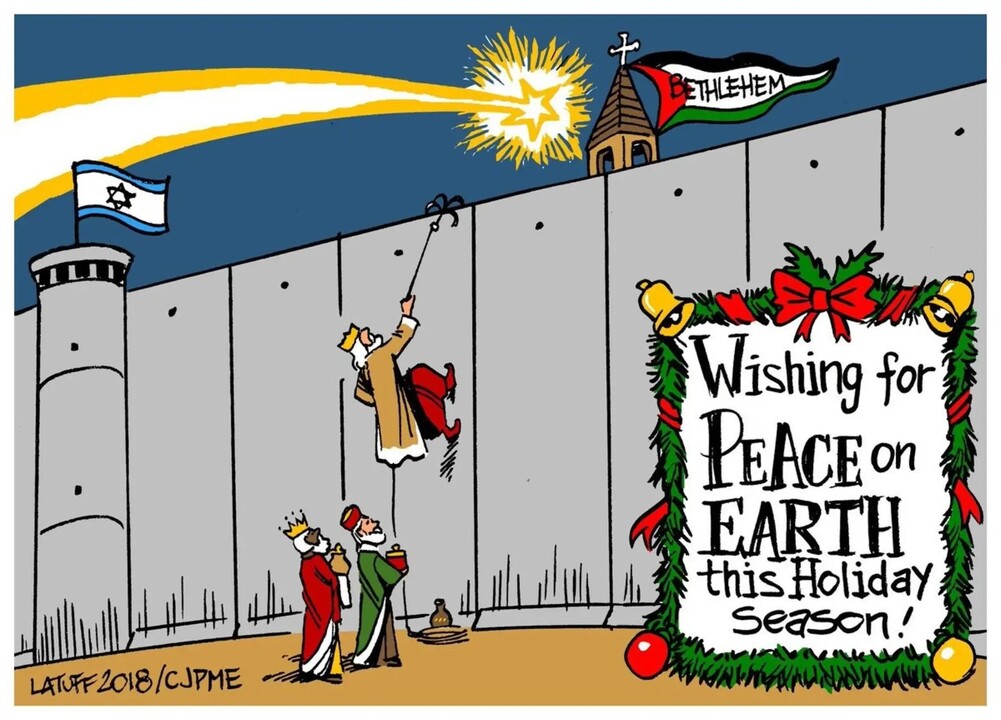
A Star is born.
“Peace be upon me the day I was born, and the day I will die, and the day I am raised alive.” Jesus. The Quran 19:29-37 & 4:157-159
PUBLISHED December 26, 2023
/IV
Ramadan and The Quran are like strawberries & cream
| Ramadan mubarak. Warning: Not Vegan but friendly enough. By Rafakut Ali APR 2022. Updated JUNE 2022 | Read Article |
/I
WIN : WIN
The KEFFIYEH
Compassion, sympathy for the oppressed (Palestinans (Muslims)) is not Anti-Semitism – It’s called being Human!!
Article by Rafakut Ali NOV 2021
/XII
REPENT > REFORM > REFRAIN
the ancient house of abraham
Indeed, the first House of worship established for mankind was The Ka’aba – blessed and a guidance for the world. Quran 3:96
Read Article by Rafakut Ali 2021 >
Eid-al-Hajj. Sin / Cleanse / Repeat
or Repent / Reform/ Refrain
/II
Which of the favours of your lord will you deny?
Check back soon
So then which of the favors of your Lord would you deny? Surah Rahman 55 x 31
/VII
POPPIES (NOT) FOR MUSLIMS
> READ MORE”>PAKIS HAD NOTHING TO DO WITH COVID-19 > READ MORE
Poppies (not) for muslims > Read Article by Rafakut Ali NOV 2021
Muslim lives matter – stop Islamophobia
/VII
WHat a piece of work is man
Quran 13:12 Surah Thunder
God shows you lightening, causing fear and hope, and generates heavy clouds.
Muslim lives matter – stop Islamophobia
/V
Which of the favours of your lord will you deny?
Check back soon
And if all the trees on earth became pens, with the sea replenished by seven more seas to supply them with ink, Gods words would not be exhausted. Verily God is Almighty, Most Wise. Quran 31:27
/III
Are you Awesome?
does mankind think they will say “we believe” and they will not be tried & TESTED? Quran 29:2

تقوى
تقوى / taqwá Mindfulness. Being conscious of God, God-cognizant. i.e. The Quran 2:2 is Guidance for the Mu’taq’een

gODSPEED CARS
Lorem ipsum dolor sit amet, consectetur.
/VIII
Which of gods mercy will you take ownership of?
Was not the Quran enough?
Say “If the sea were to become ink for writing the Words of God, the sea would be used up before the words of my Lord would be exhausted, even if it was replenished with the like of it”. Quran 18: 109
the Two seas meeting one another. between them a barrier so neither of them transgress. Quran 55:19,20
/IX
Woe to those who pray salah..
BUT ARE HEEDLESS IN their prayer. Quran 107:4,5.
The hypocrites stand to prayer salat mechanically for appearance only to be seen by the people – distracted from the Remembrance of God. Quran 4:142 (143)
/X
BLESSED lAND
Palestine
“Al-Aqsa mosque – the blessed land and surroundings” Quran 17:1
/XI
Which of the favours of your lord will you deny?
Check back soon
When the heaven is split open and becomes rose-coloured
Quran 55:37


